

What’s New in Email Deliverability Updates?

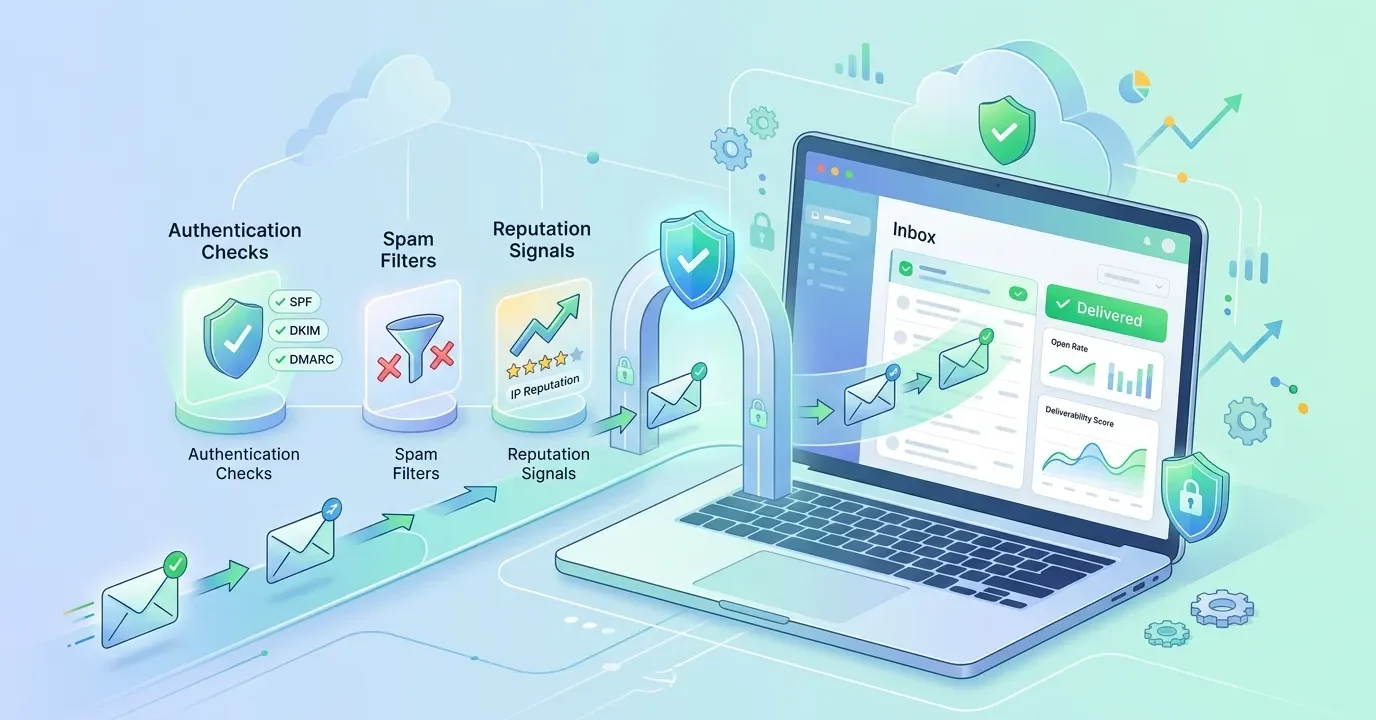
The biggest change in deliverability is the move toward mandatory authentication for bulk senders. Both Gmail and Microsoft now require senders who send large volumes of email to authenticate their messages properly. Sending without proper setup increasingly means landing in spam or being rejected entirely.
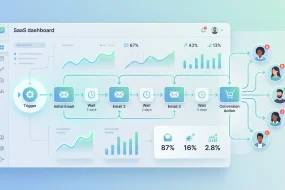
These updates are closely tied to broader email systems such as email marketing funnel strategies, where deliverability directly impacts every stage of customer conversion.
Here’s what’s shaping the current landscape:
- Authentication is non-negotiable. Bulk senders must use SPF, DKIM, and DMARC. Skipping any of these can tank your inbox placement.
- Spam complaint thresholds are enforced. Gmail asks senders to keep spam complaint rates below 0.3%, with 0.1% as the ideal target. Cross that line repeatedly, and your deliverability suffers.
- One-click unsubscribe is required. Bulk senders must offer a simple, one-click way to opt out, and they must honor those requests within two days.
These shifts reward marketers who treat email as a relationship rather than a megaphone. The senders who respect inbox preferences are the ones who keep reaching it.
Why Are Inbox Placement Rates Declining for Some Senders?
Inbox placement rate measures the percentage of your emails that actually land in the primary inbox—not spam, not the promotions tab, not a black hole. It’s a more honest metric than delivery rate, which only confirms an email wasn’t bounced.
Several trends are pulling placement rates down for unprepared senders:
- Engagement is the new currency. Mailbox providers track whether recipients open, reply, and click. Low engagement signals to filters that your mail isn’t wanted.
- Inactive subscribers hurt you. Continuing to email people who never open your messages drags your reputation down and lowers placement for everyone on your list.
- Spam traps are everywhere. Dormant addresses get recycled into spam traps. Hitting one tells providers your list hygiene is poor.
The senders seeing the best placement rates share a common habit: they prune their lists aggressively and prioritize quality over reach.
What Are the Most Common Email Marketing Deliverability Issues?
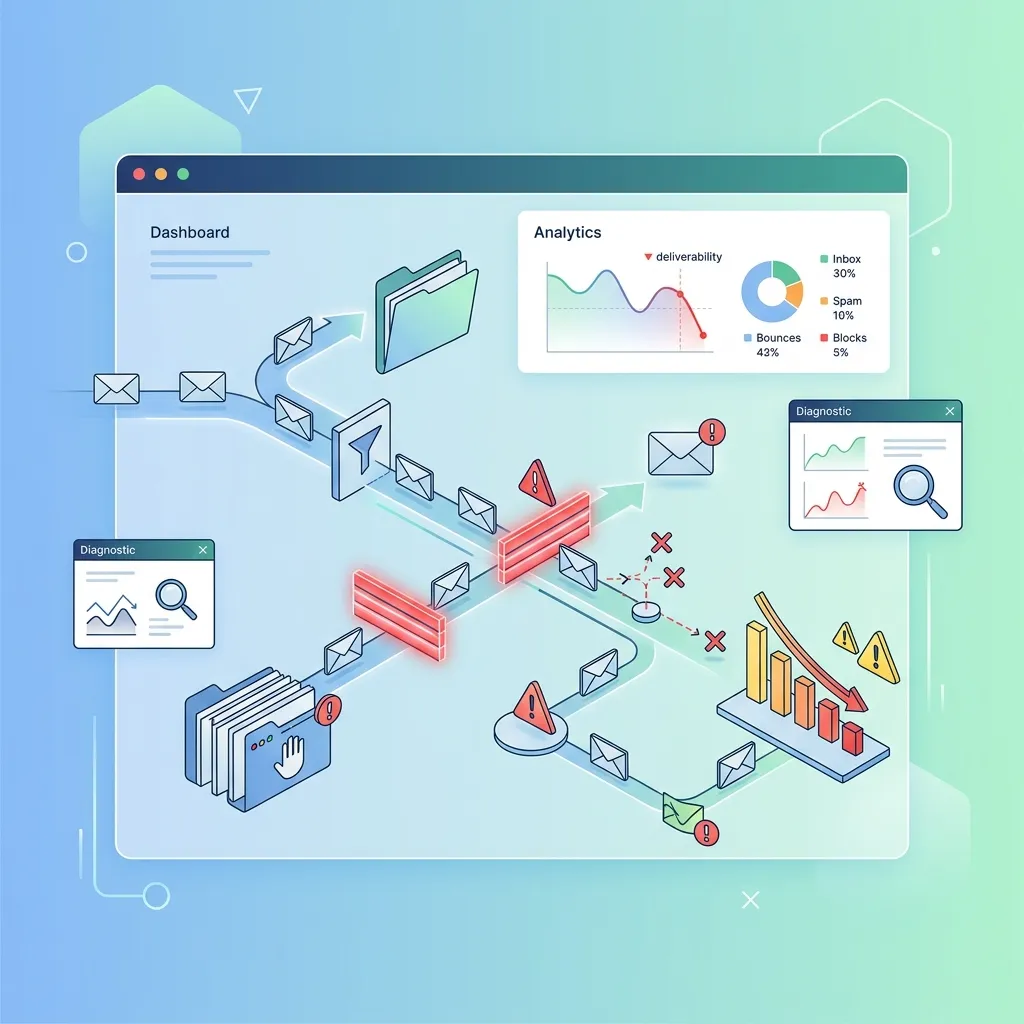
Most deliverability problems trace back to a handful of recurring culprits. Knowing them helps you diagnose trouble before it spirals.
High bounce rates
Bounces come in two flavors. Hard bounces happen when an address is invalid or no longer exists. Soft bounces are temporary, often caused by full inboxes or server issues. A high hard bounce rate is a red flag to providers that you’re emailing a stale list.
Poor list hygiene
Buying lists, failing to remove inactive contacts, and ignoring unsubscribe requests all damage your standing. Clean lists deliver better, full stop.
Spammy content
Trigger words, excessive links, image-heavy emails with little text, and misleading subject lines can all flip the spam switch. Filters read your content, not just your headers.
Missing or broken authentication
If your SPF, DKIM, or DMARC records are misconfigured, providers can’t verify you’re who you claim to be. That uncertainty often sends mail straight to spam.
How Are Spam Filter Algorithms Changing at Gmail and Outlook?
Spam filters at Gmail and Outlook have evolved from simple keyword matching into machine learning systems that evaluate hundreds of signals. Both now rely heavily on behavioral data to decide inbox placement.
Gmail closely tracks engagement patterns—opens, clicks, and spam reports—to determine sender trust, while Outlook places stronger emphasis on sender reputation and authentication like SPF, DKIM, and DMARC. Both platforms also evaluate domain reputation and consistency.
The key takeaway is simple: consistent sending, strong authentication, and high engagement are essential to stay out of spam on both Gmail and Outlook.
To adapt, marketers are increasingly improving personalization using structured messaging techniques such as email marketing storytelling, which increases engagement signals that improve inbox placement.
What Affects Email Sender Reputation?
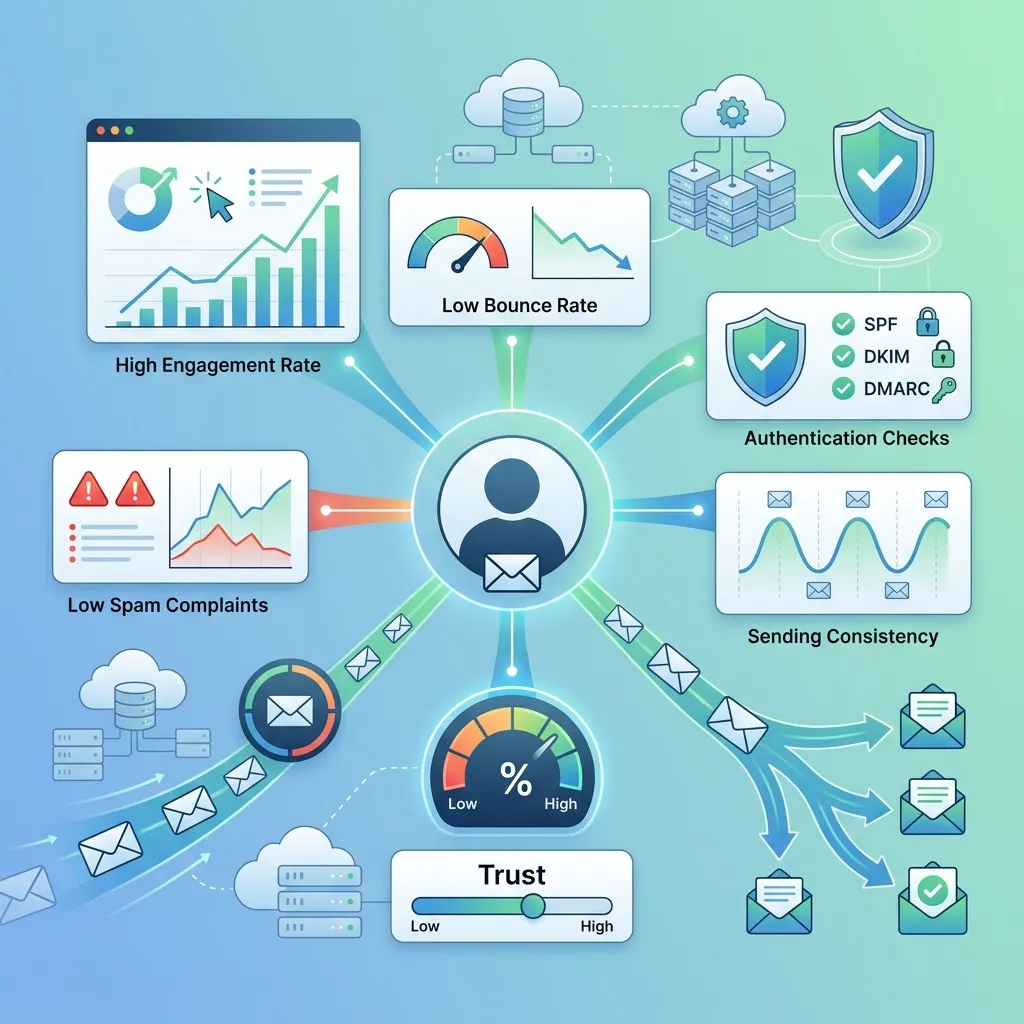
Sender reputation is the trust score mailbox providers assign to your sending domain and IP address. A strong reputation gets you the inbox; a weak one gets you the spam folder. Several factors feed into it:
- Spam complaint rate. The percentage of recipients who mark your mail as spam. Keep it well under 0.3%.
- Bounce rate. High bounces signal poor list quality. Aim to keep hard bounces under 2%.
- Engagement rates. Opens, clicks, and replies build trust. Deletions and ignores erode it.
- Sending consistency. Sudden spikes in volume look suspicious. Steady, predictable sending builds reputation.
- Spam trap hits. Landing in a spam trap is one of the fastest ways to damage your standing.
- Authentication status. Properly authenticated mail is trusted mail.
Reputation is built slowly and lost quickly. One careless campaign to a stale list can undo months of careful sending.
What’s the Latest on Domain Authentication: SPF, DKIM, and DMARC?
Domain authentication is the foundation of modern deliverability. The three core protocols work together to prove your emails are legitimate.
SPF (Sender Policy Framework) specifies which servers are allowed to send email on behalf of your domain. When a receiving server checks your SPF record, it confirms the message came from an authorized source.
DKIM (DomainKeys Identified Mail) adds a digital signature to your emails. This signature lets receiving servers verify that the message wasn’t altered in transit and genuinely came from your domain.
DMARC (Domain-based Message Authentication, Reporting, and Conformance) ties SPF and DKIM together. It tells receiving servers what to do with messages that fail authentication—monitor, quarantine, or reject—and sends you reports on how your domain is being used.
The big news: DMARC has moved from “nice to have” to “required” for bulk senders at the major providers. Many marketers start with a DMARC policy of “none” to monitor traffic, then gradually tighten to “quarantine” and finally “reject” as they confirm legitimate mail is passing. Setting a DMARC policy without first monitoring can accidentally block your own legitimate emails, so the staged approach matters.
These protocols work best when integrated into structured systems such as email marketing software workflows, which automate authentication and sending consistency at scale.
What Compliance Updates Should Email Marketers Know?
Compliance has tightened alongside the technical requirements. Beyond authentication mandates, marketers need to keep these in mind:
- Consent matters more than ever. Permission-based sending isn’t just good practice—regulations like GDPR and CAN-SPAM expect it. Only email people who agreed to hear from you.
- Easy unsubscribe is mandatory. The one-click unsubscribe requirement is now enforced by major providers. Make opting out effortless and process requests within two days.
- Accurate sender information. Your “from” name, address, and subject line must honestly represent who you are and what the email contains. Deceptive headers violate compliance rules and trigger filters.
- Honor preferences promptly. Failing to remove unsubscribed contacts quickly is both a compliance risk and a reputation killer.
Compliance and deliverability now overlap heavily. The practices that keep you legal also keep you in the inbox.
How Can You Optimize Your Email Bounce Rate?
Bounces are one of the clearest signals of list quality. Lowering your bounce rate protects your reputation and improves placement. Here’s how:
- Use double opt-in. Confirming addresses at signup filters out typos and fake entries before they hit your list.
- Verify addresses regularly. Email verification tools catch invalid and risky addresses before you send.
- Remove hard bounces immediately. Once an address hard bounces, stop emailing it. Sending again to a dead address compounds the damage.
- Re-engage or remove inactives. Run a win-back campaign for subscribers who’ve gone quiet. If they don’t respond, let them go.
- Avoid buying lists. Purchased lists are riddled with invalid addresses and spam traps. They’re a fast track to deliverability trouble.
A healthy bounce rate sits below 2% for hard bounces. Anything higher deserves immediate attention.
What Strategies Improve Inbox Placement Over Spam Placement?
Landing in the primary inbox rather than the spam folder comes down to a combination of trust signals and smart practices.
Warm up new domains and IPs
A brand-new sending domain has no reputation. Start with small volumes to your most engaged subscribers, then scale gradually. This shows providers you’re a legitimate sender building a real audience.
Segment for engagement
Send your most active subscribers more frequently and your less active ones less often. This keeps your overall engagement metrics strong, which filters reward.
Write for humans, not filters
Clear subject lines, balanced text-to-image ratios, and genuinely useful content all help. Avoid spam trigger words and misleading hooks.
Maintain consistent sending
Predictable volume and cadence build trust. Don’t go silent for months and then blast your entire list at once.
Monitor your metrics
Tools like Google Postmaster Tools and Microsoft’s Smart Network Data Services give you visibility into your reputation and complaint rates. Watch them closely and act on warning signs early.
What Are Realistic Email Marketing Performance Benchmarks?
Benchmarks vary by industry, but a few targets help you gauge whether your deliverability is healthy:
- Inbox placement rate: Aim for 90% or higher. Below 80% signals serious reputation problems.
- Hard bounce rate: Keep it under 2%. Lower is better.
- Spam complaint rate: Stay under 0.1% if possible, and never exceed 0.3%.
- Open rate: Across industries, average open rates typically fall in the 20–35% range, though this depends heavily on your audience and how providers count opens.
- Unsubscribe rate: A healthy rate sits below 0.5% per campaign.
Treat these as directional guides rather than rigid rules. Your own historical performance is the most useful benchmark you have. Track it over time and watch for sudden drops, which often signal a deliverability issue brewing.
Keeping Your Emails Where They Belong
Email deliverability rewards the marketers who play the long game. Authenticate your domain, respect your subscribers, clean your lists, and send content people actually want. Do those things consistently, and the inbox stays open to you.
The providers have made their priorities clear: trust, engagement, and transparency win. Start by auditing your authentication setup—confirm SPF, DKIM, and DMARC are all in place and configured correctly. Then turn your attention to list hygiene and engagement, the two levers that move placement rates the most.
Deliverability isn’t a one-time fix. It’s a habit. Build it into your routine, and your hard-earned content will reach the people you wrote it for.
Frequently Asked Questions
What is a good email deliverability rate?
A strong inbox placement rate is 90% or higher, meaning at least 9 in 10 of your emails reach the primary inbox rather than spam. Anything below 80% points to reputation or authentication problems that need fixing.
Why are my emails going to spam instead of the inbox?
The most common reasons are missing or broken authentication (SPF, DKIM, DMARC), poor list hygiene, low subscriber engagement, high spam complaint rates, and spammy content. Auditing each of these usually reveals the culprit.
Do I need SPF, DKIM, and DMARC for email marketing?
Yes. Major mailbox providers now require bulk senders to authenticate with all three. Without proper authentication, your emails are far more likely to be filtered into spam or rejected outright.
How often should I clean my email list?
Review your list regularly—quarterly at minimum, monthly if you send frequently. Remove hard bounces immediately, and run re-engagement campaigns for inactive subscribers before deciding whether to remove them.
What spam complaint rate is too high?
Keep your spam complaint rate below 0.1% as a target and never let it exceed 0.3%. Gmail explicitly flags senders who cross that threshold, and consistently high complaints will damage your inbox placement.
How do I warm up a new sending domain?
Start by sending small volumes to your most engaged subscribers, then increase gradually over several weeks. This builds a positive reputation slowly and shows mailbox providers you’re a legitimate sender rather than a spammer.
What is email deliverability news and why does it matter?
Email deliverability news refers to the latest updates from Gmail, Outlook, and other providers that impact inbox placement, spam filtering, and sender reputation. It helps marketers stay compliant and improve email performance.
How does email deliverability news affect marketers?
Email deliverability news affects marketers by highlighting changes in spam filters, authentication rules, and engagement-based ranking that directly influence whether emails reach the inbox or spam folder.
What are the latest trends in email deliverability news?
Recent email deliverability news shows stricter SPF, DKIM, and DMARC enforcement, lower spam complaint thresholds, and a stronger focus on sender reputation and engagement metrics.
Why is authentication important according to email deliverability news?
Email deliverability news consistently emphasizes that SPF, DKIM, and DMARC authentication are essential to prove sender legitimacy and avoid spam filtering.
How often should businesses follow email deliverability news updates?
Businesses should follow email deliverability news regularly—at least monthly—to stay updated with Gmail and Outlook policy changes and avoid deliverability issues.
What role does sender reputation play in email deliverability news?
Email deliverability news highlights sender reputation as a key factor in inbox placement, where consistent engagement and low complaint rates improve delivery success.
How does email deliverability news explain spam filter changes?
Email deliverability news explains that spam filters now use AI and behavioral signals like engagement, clicks, and complaints instead of just keyword-based filtering.
Can email deliverability news help reduce spam complaints?
Yes, following email deliverability news helps marketers understand compliance rules and best practices, which reduces spam complaints and improves inbox placement rates.
Where can I find reliable email deliverability news updates?
You can follow industry blogs, Google Postmaster updates, Microsoft SNDS reports, and email marketing platforms that regularly publish email deliverability news insights.


I'm Email Marketer who crafts targeted campaigns that drive engagement, nurture leads, and boost conversions. With a passion for creating personalized email strategies.













No Comments