

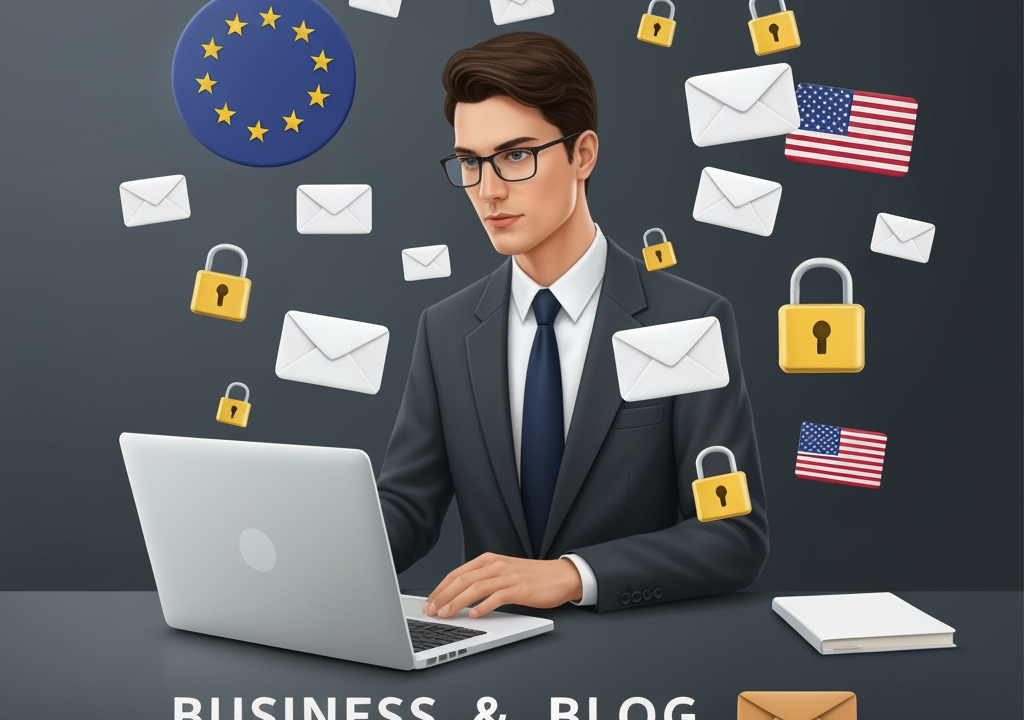
Global Email Marketing Compliance in 2025 – A Practical Playbook
Email remains one of the most cost-effective digital channels, delivering an average ROI of $36 for every dollar spent (source: Data & Marketing Association, https://thedma.org/resources/benchmark-reporting). Yet the global privacy landscape has evolved rapidly. In 2025, organizations must navigate a patchwork of regulations—from Europe’s GDPR to California’s CPRA, Canada’s CASL, Brazil’s LGPD, and a host of emerging laws in Asia, Africa, and Latin America. Failure to comply can lead to hefty fines, legal actions, and irreversible reputational damage. This guide offers a step-by-step approach, actionable tactics, and technology recommendations designed to help marketers build email programs that respect subscriber rights and drive measurable engagement.
Balancing ROI and Regulatory Risk
- Email marketing generates some of the highest engagement rates—open rates often exceed 20% and click-through rates hover around 3% (source: Statista, https://www.statista.com/).
- However, regulators have shown zero tolerance for non-compliance:
- In 2022, the European Data Protection Board fined a telecom operator €746 million for GDPR violations, including unsolicited messaging and opaque consent practices (source: EDPB, https://edpb.europa.eu/).
- California’s Attorney General secured over $1.5 million in CCPA settlements in 2023; fines can reach $7,500 per consumer per violation (source: CA OAG, https://oag.ca.gov/privacy/ccpa).
- Canada imposed CAD 1.8 million in penalties under CASL in 2021 for unsolicited commercial communications (source: FightSpam.gc.ca, https://www.fightspam.gc.ca/eic/site/030.nsf/eng/home).
- Email service providers (ESPs) and internet service providers (ISPs) flag repeat offenders, pushing legitimate campaigns into spam folders and eroding deliverability.
Core Privacy Regulations Explained
GDPR – Europe’s Comprehensive Standard
- Scope: Any entity processing EU residents’ personal data regardless of the organization’s location (source: EUR-Lex, https://eur-lex.europa.eu/).
- Lawful Bases for Processing: Consent, contract necessity, legitimate interest, legal obligation, vital interest, and public task.
- Consent Criteria: Must be freely given, specific, informed, and unambiguous—no pre-checked boxes or hidden clauses.
- Data Subject Rights: Access, rectification, erasure (right to be forgotten), restriction, portability, and objection.
- Transparency Requirements: Clear privacy notices, declared retention periods, and DPO contact information.
- Data Minimization: Limit collection to only what is necessary for declared purposes.
CCPA and CPRA – California’s Evolving Privacy Regime
- Effective January 2020 (CCPA) and amended January 2023 (CPRA) (source: CA OAG, https://oag.ca.gov/privacy/ccpa):
- Right to Know: Consumers can request details on data collection, use, and sharing practices.
- Right to Delete: Consumers may delete their personal information, subject to limited exceptions.
- Opt-Out of Sale: Websites must feature a prominent Do Not Sell My Personal Information link.
- Non-Discrimination: Businesses cannot penalize consumers for exercising their rights.
- CPRA Enhancements: Adds right to correct inaccurate data and to limit the use and disclosure of sensitive personal information.
CASL – Canada’s Anti-Spam Law
- In force since July 2014 (source: FightSpam.gc.ca, https://www.fightspam.gc.ca/):
- Express Consent: Required before sending any commercial electronic messages.
- Identification: Every email must include the sender’s name, contact details, and a valid physical address.
- Unsubscribe Mechanism: Must be straightforward and processed within 10 business days.
LGPD – Brazil’s General Data Protection Law
- Effective September 2020 (source: ANPD, https://www.gov.br/). Closely aligned with GDPR but with unique requirements for cross-border data transfers and enforcement by a centralized authority.
Other Emerging Frameworks
- India’s Draft Personal Data Protection Bill: Emphasizes explicit consent, data localization, and robust user rights (source: Ministry of Electronics & IT, https://www.meity.gov.in/).
- Japan’s APPI: Strict cross-border transfer rules and mandatory breach notifications (source: Japan Personal Information Protection Commission, https://www.ppc.go.jp/).
- South Korea’s PIPA: Enforces data minimization and swift breach disclosures (source: Personal Information Protection Commission, https://www.pipc.go.kr/).
- Mexico’s LFPDPPP: Requires transparent privacy policies and prior user consent (source: National Institute of Transparency, https://www.inai.org.mx/).
Shared Principles Across Laws
- Consent First: Always obtain explicit, informed opt-in before sending marketing emails.
- Transparency & Fairness: Clearly explain what data you collect, why you need it, how long you retain it, and who it is shared with.
- Data Minimization: Collect only the essential fields needed to provide value to subscribers.
- Security & Accountability: Implement technical safeguards (encryption, access controls) and maintain audit-ready documentation.
- Rights Management: Establish processes to handle requests for access, correction, deletion, portability, and objection.
- Breach Notification: Many regulations require notifying authorities and affected individuals within a specific timeframe (e.g., GDPR’s 72-hour rule).

Building a Compliant Email List
Double Opt-In Workflows
Send a confirmation email immediately after signup. Only add addresses once subscribers click a verification link. This approach reduces fake signups and provides clear evidence of consent.
Granular Preference Centers
Allow subscribers to choose topics, frequency, and channels (email, SMS, direct mail). Store these preferences in your ESP and honor them automatically to boost engagement and reduce complaint rates.
One-Click Unsubscribe
Every marketing email must include a prominent, single-click unsubscribe link. Process opt-out requests instantly to comply with regulatory timelines.
Consent & Activity Logging
Maintain detailed logs capturing the timestamp, IP address, version of the privacy notice, and exact consent language. These records are your strongest defense in case of audits.
Regular List Hygiene
Purge inactive subscribers every 3–6 months. Immediately remove hard bounces and suppress soft bounces after repeated failures. Routine cleanup improves deliverability and sender reputation.
Data Retention Policies
Define clear retention rules (e.g., delete or anonymize records after 24 months of inactivity). Automate deletions to prevent data sprawl and ensure compliance with erasure rights.
Technology Toolbox
- Consent Management Platforms (CMPs): Tools like OneTrust or TrustArc unify consent capture across websites, apps, and email sign-up forms, centralizing audit logs.
- Privacy-Ready ESPs: Choose providers offering geo-segmentation, automated double opt-in, dynamic footers, and versioned consent records.
- Data Governance Solutions: Platforms such as Collibra or BigID map data flows, helping respond quickly to access or deletion requests.
- Vendor Risk Management: Conduct annual assessments of third-party processors, verify Data Processing Agreements (DPAs), and review sub-processor lists for compliance alignment.
Regional Highlights and Emerging Markets
Latin America
- Brazil’s LGPD: Requires DPO appointments and public breach notifications.
- Mexico’s LFPDPPP: Enforces transparent notice requirements and sanctions for non-consent.
Asia-Pacific
- Japan’s APPI: Demands strict consent for cross-border transfers.
- Singapore’s PDPA: Imposes mandatory breach notifications and can levy multi-million-dollar fines.
- India: Draft legislation is expected to closely mirror GDPR’s consent and user-rights framework.
Africa
- South Africa’s POPIA: Enforces consent, data subject access, and retention limits.
- Kenya and Nigeria: Data protection bills are in advanced stages, signaling stronger privacy regimes soon.
Case Study – Retailer Remediation
Company Zeta, a mid-sized e-commerce brand, faced a potential €1 million GDPR fine in 2023 due to weak opt-in processes and unmonitored third-party imports. Their remediation included:
- Deploying a CMP to unify consent capture across web and mobile.
- Migrating to an ESP with built-in geofencing, automated double opt-in, and consent versioning.
- Rewriting privacy notices in plain language and tracking versions.
- Conducting company-wide training on data privacy best practices.
Within six weeks, Zeta achieved full compliance, reduced unsubscribe rates by 30%, and improved open rates by 12%. Regulators closed the audit with no penalties.

2025 Action Plan – Five Key Steps
- Comprehensive Audit
- Map all email touchpoints, data sources, and processing flows.
- Document data transfers, retention schedules, and third-party integrations.
- Policy and Notice Updates
- Refresh privacy policies, cookie banners, and email footers to reflect regional requirements.
- Link directly to authoritative sources such as EUR-Lex for GDPR, CA OAG for CCPA, and FightSpam.gc.ca for CASL.
- Technology Enhancements
- Implement or upgrade CMPs and privacy-ready ESPs.
- Automate consent recording, version control, and geo-based compliance rules.
- Training and Governance
- Hold quarterly workshops on new and amended regulations.
- Assign clear roles from DPO to marketing leads, with documented accountability.
- Ongoing Monitoring and Testing
- Schedule biannual risk assessments, penetration tests, and list hygiene reviews.
- Use deliverability analytics to spot and fix compliance misconfigurations early.
Conclusion
In 2025, embedding privacy and compliance into every email workflow is no longer optional—it’s a strategic imperative. By aligning your email marketing program with global regulations, you not only mitigate legal and financial risk but also cultivate trust and loyalty among subscribers. Follow the principles, implement the tactics, and leverage the technologies outlined in this guide to transform compliance from a challenge into a differentiator. Start your journey today with a thorough audit, policy updates, and robust training programs. Your subscribers—and your bottom line—will thank you for it.


I'm Email Campaign Manager who helps businesses design, execute, and optimize effective email marketing campaigns. With expertise in audience segmentation, campaign automation, and performance tracking, ensures emails reach the right audience and deliver measurable results.















No Comments