


Harnessing Narrative Power in Email Marketing: A Comprehensive Guide
Introduction
In today’s crowded inbox environment, bland, transactional emails are easily dismissed. To truly stand out, marketers must tap into the enduring human attraction to stories. By weaving narratives into campaigns, brands can transform routine updates into emotionally resonant journeys. Neuroscience confirms that stories engage empathy centers and reward circuits more deeply than plain facts, driving higher retention, stronger trust, and improved conversion. This guide offers a step-by-step framework for infusing email communications with compelling narratives, practical tactics for execution, and links to authoritative studies and resources.
The Science Behind Compelling Stories
Research in psychology and neuroscience reveals why narratives outperform data dumps:
- Oxytocin and Trust: Neuroeconomist Paul J. Zak’s experiments show viewers who listen to genuine, character-driven stories release higher levels of oxytocin, the so-called trust hormone, making recipients more receptive to your message (https://hbr.org/2014/10/your-brain-on-fiction).
- Dopamine and Memory: Dramatic peaks and cliffhangers trigger dopamine surges, which enhance focus and cement memories—ensuring your brand’s message lingers long after the inbox closes (Frontiers in Psychology, https://www.ncbi.nlm.nih.gov/pmc/articles/PMC3622084/).
- Cognitive Ease: Story structures provide familiar frameworks that help readers process and organize information with less mental effort, reducing unsubscribe rates and boosting engagement (University of Southern California study).
Key Takeaways
- Lead with a relatable protagonist.
- Build tension through conflict or obstacles.
- Resolve with a clear, benefit-driven conclusion.

Mapping Emotional Stakes for Your Audience
Not all subscribers share the same challenges or motivations. Effective storytelling begins with a granular understanding of your segments’ emotional journeys.
- Quantitative Insights: Analyze open and click-through rates to identify patterns—do certain segments respond better to urgency, curiosity, or social proof? Tools like Google Analytics and your ESP’s reporting dashboard are essential.
- Qualitative Feedback: Conduct quick polls or one-question surveys after a campaign to capture subscriber sentiment. Ask which part of the email resonated most and why.
- Persona Workshops: Gather cross-functional teams—marketing, sales, customer support—to map typical subscriber profiles. Use the U.S. Small Business Administration’s market research guide for templates (https://www.sba.gov/business-guide/plan-your-business/market-research-competitive-analysis).
- Emotion-Action Matrix: Create a two-axis grid. On the vertical, list emotions subscribers feel at each stage (frustration, hope, excitement). On the horizontal, list desired actions (download guide, upgrade trial, share feedback). Refer to this matrix when sculpting narrative beats.
Crafting Your Email Story Arc
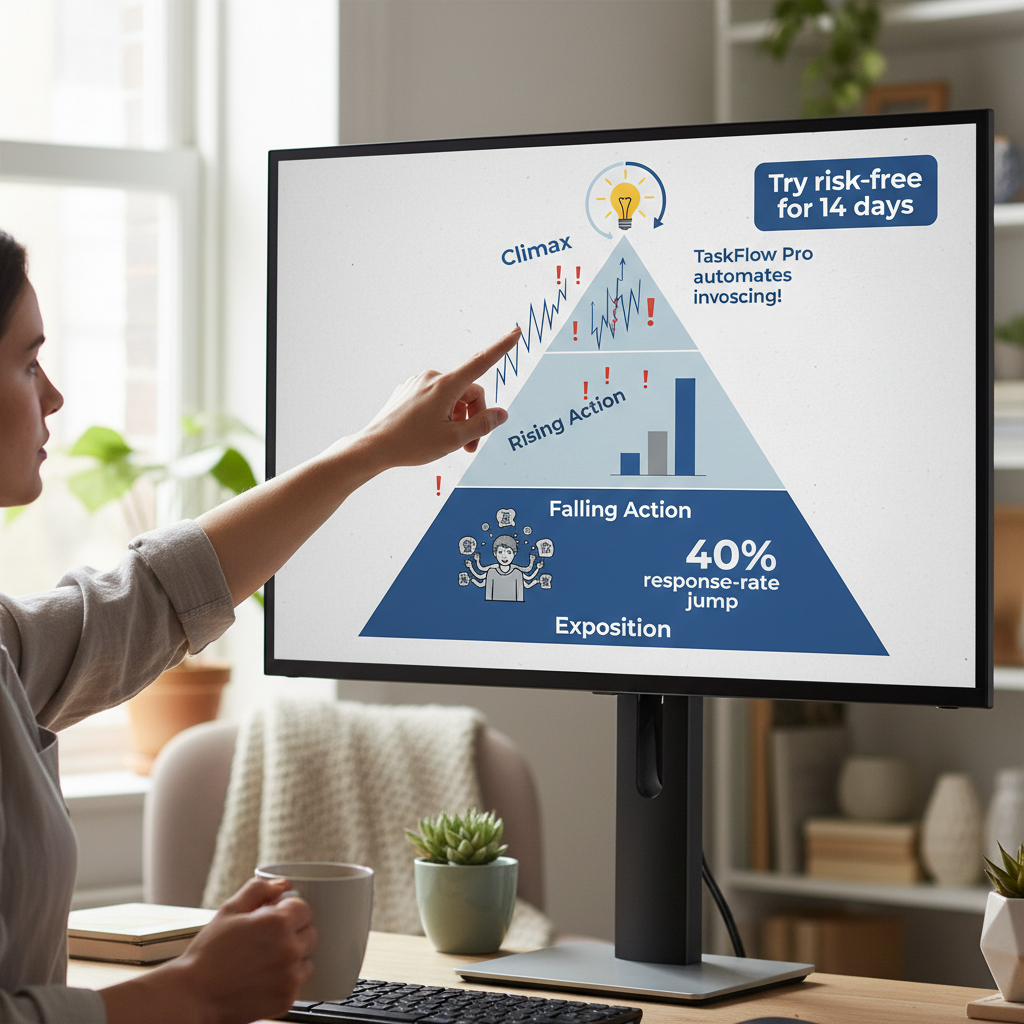
Classic storytelling frameworks like Freytag’s Pyramid (exposition, rising action, climax, falling action, resolution) can be adapted to the email format:
- Exposition: Set the stage in one or two sentences. Introduce a character—real or archetypal—facing a recognizable challenge. Example: “When Mia started freelancing full-time, she was overwhelmed by juggling client calls, invoicing, and deadlines.”
- Rising Action: Layer in complications. Use numbered items or bullet points to illustrate mounting tension. “Late nights, missed invoices, and endless to-do lists had her questioning if freelancing was worth it.”
- Climax: Reveal the turning point. Show how your product or service sparked a breakthrough. “After integrating TaskFlow Pro, Mia automated her invoicing in minutes, freeing up 10 hours a week.”
- Falling Action: Demonstrate measurable improvements. Include a mini case study or a quick stat: “Within two weeks, her response rate shot up 40%, and she reclaimed her weekends.”
- Resolution & Call-to-Action: Close with an invitation: “Ready to transform your workflow? Try TaskFlow Pro risk-free for 14 days.” Make the call-to-action button feel like the natural conclusion of the story.
Infusing Authentic Brand Voice
Consistency in tone and style cements your brand identity and cultivates familiarity. Every narrative element should reinforce your core voice:
- Tone Filters: Define three adjectives that describe your brand voice (e.g., approachable, insightful, witty). Use these as a checklist when drafting.
- Language Choices: If your brand is conversational, include contractions and light humor. If it’s authoritative, weave in data citations from sources like Pew Research Center (https://www.pewresearch.org).
- Signature Elements: Introduce recurring elements such as an opening anecdote or a branded sign-off (“Until next time, keep those creative gears turning!”). These become touchpoints subscribers anticipate.
Designing for Narrative Flow
A well-designed template guides readers from introduction to call-to-action without friction:
- Hero Visual: Start with an image or illustration that reflects your story’s opening. Optimize alt text to reinforce your main message (under 80 characters) for accessibility and deliverability.
- Scannable Sections: Break text into short paragraphs (max two sentences), pepper in subheadings, and use bullet lists to spotlight key story beats.
- Embedded Media: GIFs and short videos can dramatize pivotal moments—a ticking clock to emphasize urgency or a quick demo of the solution in action (keep clips under 15 seconds for load speed).
- Progress Indicators: In multipart series, label each email (“Chapter 2 of 4”) so readers know where they are in the narrative.
- Strategic CTA Placement: Position your primary button near the story’s resolution, rather than tucking it at the very bottom.
Personalized and Dynamic Story Elements
Static messaging no longer cuts through. Dynamic content personalization elevates relevance:
- Contextual Merge Tags: Include the subscriber’s first name and reference their last activity—“Jessica, after exploring our productivity report…”—to create an immediate connection.
- Behavioral Stories: If a user browsed a pricing page, trigger a follow-up tale about a similar customer who saw real ROI post-purchase.
- Geo-Localized Anecdotes: For segmented audiences, share success stories from the same region or industry.
- Real-Time Recommendations: Embed dynamic product or resource suggestions aligned with the email’s narrative. Many ESPs support content blocks powered by user profiles.
Balancing personalization with privacy is critical. Review guidelines from the Federal Trade Commission on responsible data use (https://www.ftc.gov/tips-advice/business-center/privacy-and-security).
Measuring Narrative Success
Treatment of storytelling as a continuous experiment drives ongoing improvement. Focus on these metrics:
- Open Rates: Use tools like Litmus (https://www.litmus.com) to A/B test subject lines that tease narrative hooks versus straightforward offers.
- Engaged Time: Evaluate “time spent reading” stats—longer dwell times suggest stories are holding attention better than traditional campaigns.
- Click-Through and Conversions: Map each button back to a specific story beat. If clicks dip before the climax, revise conflict statements to heighten intrigue.
- Heatmap Analytics: Services like Crazy Egg or Hotjar reveal which sections draw attention, helping you refine your layout and storytelling order.
- Subscriber Feedback: Periodic pulse checks—short surveys embedded in emails—capture qualitative insights on what narratives resonated most.
Case Studies in Story-Driven Campaigns
- Airbnb’s Host Spotlight Series: Featured personal journeys of hosts saving for college, driving a 22% increase in host referrals.
- Patagonia’s Eco Action Emails: The founder’s personal accounts of conservation efforts prompted a 15% rise in petition sign-ups (Campaign Monitor case studies, https://www.campaignmonitor.com/resources/case-studies/).
- FEMA’s Preparedness Narratives: Short stories of real families who averted disaster by following safety steps saw engagement jump 12% (Ready.gov news alerts, https://www.ready.gov/news-alerts).
- Codecademy Learning Journeys: A multi-email series charting a student’s progress through Python fundamentals boosted program enrollments by 30%.
Conclusion: Begin Your Narrative-Driven Emails
Storytelling in email marketing isn’t a novelty—it’s a strategic imperative grounded in human psychology. By blending neuroscience insights, audience research, clear narrative structures, and thoughtful design, you can craft sequences that convert like ads but read like engaging conversations.
Next Steps
- Collect authentic customer or team anecdotes.
- Map a concise narrative arc highlighting your top benefit.
- Design each email as a standalone chapter with a clear resolution and CTA.
- Monitor performance using both quantitative metrics and subscriber feedback.
- Iterate relentlessly—refining story details, personalizations, and design to maximize impact.
Further Resources
- Email Experience Council Benchmark Report (https://eec.org)
- U.S. Government Data Portal for demographic insights (https://www.data.gov)
- Pew Research Center on digital media trends (https://www.pewresearch.org)


I'm Email Campaign Manager who helps businesses design, execute, and optimize effective email marketing campaigns. With expertise in audience segmentation, campaign automation, and performance tracking, ensures emails reach the right audience and deliver measurable results.









No Comments