


Are your open rates dropping? Email Marketing Storytelling is the ultimate strategy to capture attention, connect deeply with your subscribers, and drive meaningful action.
This guide breaks down exactly how to master Email Marketing Storytelling. You will discover actionable frameworks, psychological triggers, and expert techniques to transform boring promotional blasts into captivating narratives that boost engagement, build unwavering brand loyalty, and skyrocket conversions.
The Power of Email Marketing Storytelling
Email Marketing Storytelling completely shifts how subscribers interact with your brand. Instead of pushing dry facts and discount codes, you invite the reader into a narrative. Human brains are hardwired for stories. When you use Email Marketing Storytelling, you bypass the logical, skeptical part of the brain and tap directly into emotion.
Whether you run an e-commerce brand or a B2B service, leveraging narrative structures ensures your messages stand out in a crowded inbox. It turns passive readers into active participants in your brand’s ecosystem. To fully grasp this, we must look at how narratives influence purchasing decisions and overall customer retention strategies.
Why Stories Work in Inboxes
When a subscriber opens an email, they silently ask, “What is in this for me?” Traditional marketing answers this with features. Email Marketing Storytelling answers this with an experience. By sharing a relatable struggle and a triumphant resolution, you release dopamine and oxytocin in the reader’s brain. These chemicals foster trust and empathy, which are the fundamental building blocks of any successful sales funnel.
Building Long-Term Relationships
Transactional emails generate short-term spikes in revenue, but they train your audience to only buy when there is a sale. Email Marketing Storytelling trains your audience to open your emails because they enjoy reading them. This creates a sustainable, long-term relationship where customers buy because they believe in your brand, not just because you offered a 20% discount.
Core Elements of Effective Email Marketing Storytelling
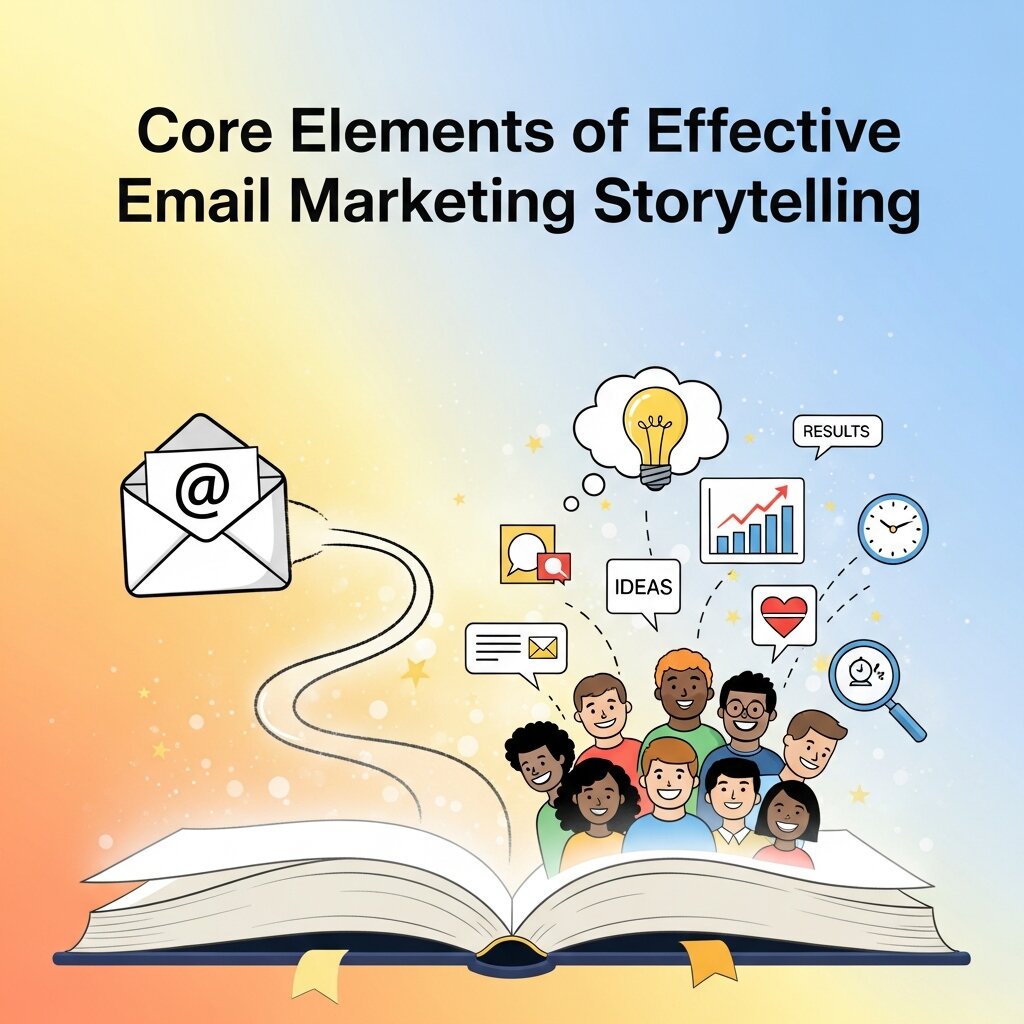
Every great story shares a similar DNA. To implement Email Marketing Storytelling effectively, your campaigns must include three foundational elements. Without these, your email is just a basic update rather than a compelling narrative.
The Protagonist (Your Customer)
The biggest mistake brands make in Email Marketing Storytelling is positioning themselves as the hero. Your brand is not the hero; your customer is. You are simply the guide (the mentor) helping them achieve their goals. Frame the narrative around someone exactly like your target audience. Use customer personas to define their desires, fears, and daily habits. If you’re still building your audience, learning how to build email lists for marketing is a crucial first step.
The Conflict (The Pain Point)
A story without conflict is incredibly boring. In Email Marketing Storytelling, the conflict represents your customer’s pain point. Are they struggling to save time? Are they frustrated with poor-quality software? Agitate this pain point gently. Show them that you understand exactly how frustrating their current situation is before you introduce a solution.
The Resolution (Your Solution)
The resolution is where your product or service shines. Show how the protagonist used your offering to overcome their conflict and achieve their desired outcome. Describe the emotional relief they felt. This transition from conflict to resolution is the core engine of high-converting promotional sequences, similar to what you’ll find in email campaigns that actually convert
Step-by-Step Guide to Crafting Your Narrative
Creating a successful Email Marketing Storytelling campaign requires a systematic approach. Follow this step-by-step guide to build sequences that captivate your audience from the very first welcome email.
Step 1: Define Your Core Objective
Before typing a single word, determine what you want the email to achieve. Are you trying to sell a new product, gather feedback, or nurture cold leads? Your objective dictates the type of story you tell. For example, an origin story builds trust, while a customer success story drives direct sales.
Step 2: Hook the Reader Immediately
Your subject line and the first sentence must hook the reader instantly. Start in the middle of the action. Instead of saying, “We created a new software,” say, “Last Tuesday, my laptop crashed minutes before the biggest presentation of my life.” This creates an information gap, forcing the subscriber to keep reading to find out what happened. Crafting compelling hooks is a key part of learning to write a marketing email that actually gets results
Step 3: Use the PAS Framework
The PAS (Problem, Agitate, Solution) framework is perfect for Email Marketing Storytelling.
- Problem: Introduce the specific challenge.
- Agitate: Describe how annoying, costly, or painful that challenge is.
- Solution: Introduce your product as the magical tool that resolves the issue.
Step 4: Include a Clear Call to Action (CTA)
Never leave your reader wondering what to do next. Your story must seamlessly transition into a strong, single Call to Action. Make the CTA relevant to the narrative. If your story was about saving time, your CTA should read, “Start saving 5 hours a week right now,” rather than a generic “Click here.”
Comparison: Traditional Emails vs. Story-Driven Emails
Understanding the difference between standard outreach and Email Marketing Storytelling helps clarify your strategy.
|
Feature |
Traditional Marketing Emails |
Story-Driven Emails |
|---|---|---|
|
Focus |
Product features, discounts, and brand news |
Customer struggles, emotional journeys, and solutions |
|
Structure |
Bullet points and loud graphics |
Paragraphs, dialogue, and natural flow |
|
Tone |
Corporate, formal, and pushy |
Conversational, empathetic, and relatable |
|
Open Rates |
Often low, dependent on sales events |
High, driven by curiosity and connection |
|
Long-Term Value |
Trains subscribers to wait for discounts |
Builds brand loyalty and brand advocates |
Advanced Email Marketing Storytelling Techniques

Once you master the basics, you can apply advanced Email Marketing Storytelling strategies to maximize your return on investment.
The Soap Opera Sequence
The Soap Opera Sequence is a multi-day email series designed to build massive anticipation. Coined by marketing experts, this strategy uses open loops. You start a story in Email 1 but leave the climax for Email 2. You start a new story in Email 2 and finish it in Email 3. This technique skyrockets open rates because subscribers desperately want to know what happens next. It is highly effective for product launches and onboarding series.
User-Generated Stories
You do not always have to write the stories yourself. Leverage your customers. Share a detailed case study or a testimonial written from a customer’s perspective. User-generated Email Marketing Storytelling provides massive social proof. When a prospect reads a story about someone just like them who solved a major problem using your product, their purchasing resistance plummets.
The “Us vs. Them” Narrative
This narrative style unites your audience against a common enemy. The enemy does not have to be a competitor; it can be an outdated industry standard or a frustrating norm. For example, if you sell natural skincare, your enemy is toxic chemicals. Crafting stories about why you rejected the old way of doing things builds a fiercely loyal tribe.
Integrating Storytelling into Different Campaign Types
Email Marketing Storytelling is not limited to newsletters. You can weave narratives into every automated sequence you build.
The Welcome Sequence
Your welcome sequence is your digital first impression. Use this opportunity to tell your brand’s origin story. Why did you start this company? What massive failure led you to create this product? Vulnerability in a welcome sequence establishes immediate trust and sets the tone for all future automated email marketing workflows.
The Abandoned Cart Sequence
Instead of sending a generic “You forgot something” email, use Email Marketing Storytelling. Tell a quick, lighthearted story about how sad the abandoned product is sitting in the warehouse. Alternatively, share a micro-story about a customer who bought that exact item and how it changed their day.
The Win-Back Campaign
When subscribers go cold, stories reignite their interest. Send an email detailing the exciting journey your brand has taken since they last engaged. Ask them to share their own story about why they have been quiet. This conversational approach dramatically increases re-engagement rates.
Common Mistakes to Avoid in Email Marketing Storytelling
Even experienced marketers make errors. Avoid these common pitfalls to protect your Email Marketing Storytelling efforts.
- Making It Too Long: While stories are engaging, emails still need to respect the reader’s time. Cut unnecessary details. Keep paragraphs short (2-3 sentences) to maintain visual appeal.
- Forgetting the Point: A story without a clear connection to your product or CTA is just a diary entry. Every narrative must logically bridge to your ultimate goal.
- Faking Stories: Consumers spot inauthenticity instantly. Never invent a fake customer or a fabricated origin story. If you lack customer stories, use personal anecdotes or historical analogies.
- Boring Subject Lines: Your story can be a masterpiece, but if the subject line is dull, no one will read it. Use curiosity-driven subject lines that hint at the narrative inside.
Pro Tips and Expert Insights
To truly excel at Email Marketing Storytelling, consider these expert strategies used by top copywriters.
- Use Sensory Details: Ground your stories in reality by using sensory language. Describe the smell of the coffee, the glare of the computer screen, or the frustrating sound of an error message. Sensory details pull the reader into the scene.
- Leverage Formatting for Rhythm: Use bold text to highlight key emotional shifts. Use ellipses (…) to create pauses and build tension. Formatting dictates the speed at which your subscriber reads the email.
- Test and Iterate: Always A/B test your narratives. Test an emotional origin story against a data-driven customer success story. Analyze your email metrics to see which narrative style resonates most deeply with your specific audience.
- Keep a Story Bank: Writers block is real. Keep a running document on your phone or computer. Whenever you experience an interesting interaction, overcome a hurdle, or hear a great customer quote, write it down. Use this story bank to fuel your campaigns.
Measuring the Impact of Your Narratives

How do you know if your Email Marketing Storytelling is actually working? You must track the right metrics.
While open rates tell you if your subject line worked, click-through rates (CTR) and reply rates are the true indicators of a compelling story. A highly engaging story will prompt subscribers to reply directly to the email. Monitor these replies carefully; they are a goldmine for future content. Furthermore, track your conversion rates on the backend to ensure the narrative is effectively driving revenue.
You can learn more about comprehensive marketing strategies and tracking by exploring insights from the Content Marketing Institute, which extensively covers audience engagement metrics.
Building a Culture of Storytelling
Implementing Email Marketing Storytelling should not be an isolated tactic. It should permeate your entire marketing strategy. Ensure your landing pages, social media posts, and ad copy all echo the narratives you establish in your emails. This consistency creates a unified brand experience that comforts the buyer and reinforces their decision to trust you.
Conclusion
Mastering Email Marketing Storytelling completely transforms how subscribers interact with your brand. By prioritizing emotional connection, utilizing proven narrative frameworks, and placing the customer at the center of the journey, you build unwavering loyalty. Start integrating these storytelling techniques into your next campaign, and watch your engagement and conversions reach new heights.
FAQs
1. What is Email Marketing Storytelling?
Email Marketing Storytelling is the practice of using narrative structures—such as a protagonist, conflict, and resolution—to communicate your brand’s message, rather than relying on dry facts or direct promotional pitches.
2. Why does Email Marketing Storytelling increase conversions?
Stories trigger emotional responses, building trust and empathy. When subscribers feel understood and emotionally invested in a narrative, their resistance to purchasing drops, naturally leading to higher conversions.
3. Can B2B companies use Email Marketing Storytelling?
Absolutely. B2B buyers are still humans driven by emotion. Sharing case studies, origin stories, or stories about overcoming industry-specific frustrations works incredibly well in the B2B space.
4. How long should a story-based email be?
While longer than standard promotional emails, they should still be concise. Aim for 300 to 600 words. Focus on short, scannable paragraphs and remove any fluff that does not advance the narrative.
5. How do I come up with ideas for Email Marketing Storytelling?
Keep a “story bank.” Draw inspiration from customer reviews, daily operational challenges, personal anecdotes, historical events, or the specific hurdles your product was designed to overcome.
6. Where should the Call to Action (CTA) go in a story email?
The CTA should naturally follow the resolution of the story. Place it at the very end of the email, ensuring the transition from the narrative to the pitch feels seamless and logical.
7. What is the Soap Opera Sequence?
It is a multi-day email framework that uses “open loops.” You start a story in one email but delay the conclusion until the next email, creating massive anticipation and dramatically increasing open rates.
8. Should I use images in Email Marketing Storytelling?
While a supporting image can help, text-heavy emails often perform better for storytelling because they feel like a personal letter from a friend rather than a polished corporate advertisement.
9. How do I write a good subject line for a story email?
Use curiosity and information gaps. Instead of “Our New Update,” use “I almost gave up until this happened…” Make the subscriber feel they are missing out on a secret if they do not open it.
10. Can I reuse stories across different campaigns?
Yes. A great foundational story, such as your brand’s origin or your best customer success study, can be repurposed in welcome sequences, social media posts, and automated sales funnels.


I'm Email Campaign Manager who helps businesses design, execute, and optimize effective email marketing campaigns. With expertise in audience segmentation, campaign automation, and performance tracking, ensures emails reach the right audience and deliver measurable results.




No Comments