Timing can make or break your email marketing campaigns. You could craft the perfect subject line, design stunning visuals, and write compelling copy—but if your email lands in someone’s inbox at the wrong moment, it might never get opened.
The question isn’t just about finding the “perfect” time to send emails. It’s about understanding your audience’s behavior, testing different approaches, and optimizing based on real data. This guide will walk you through the research on email timing, industry benchmarks, and practical strategies to boost your open rates and engagement.
The Science Behind Email Timing
Email timing matters because it directly affects visibility and engagement. When you send an email at the right moment, you’re more likely to catch recipients when they’re actively checking their inbox and have time to engage with your content.
Research shows that email open rates can vary by as much as 20% depending on when you send them. But these numbers don’t tell the whole story. Your audience’s behavior, industry, and email type all play crucial roles in determining the best send times.
Why Timing Affects Performance
Several factors influence how timing impacts your email marketing results:
Inbox competition: During peak hours, your email competes with dozens of others for attention. Sending at less crowded times can help your message stand out.
Recipient availability: People check their email at different times throughout the day. Some are early morning checkers, others prefer evening browsing sessions.
Device usage patterns: Mobile opens peak during commute times and lunch breaks, while desktop opens are higher during traditional work hours.
Content relevance: A promotional email about weekend activities will perform differently when sent on Tuesday versus Friday.
Industry Benchmarks and Research Findings
Multiple studies have analyzed billions of emails to identify optimal send times. While results vary, several patterns emerge consistently.
Best Days to Send Marketing Emails
Tuesday through Thursday consistently outperform other days across most industries. Tuesday often ranks as the top performer, with open rates typically 2-3% higher than weekend sends.
Monday can work well for B2B emails, as professionals catch up on communications after the weekend. However, avoid Monday mornings when inboxes are overflowing.
Friday’s performance depends heavily on your audience. B2B emails often decline on Fridays, while consumer-focused messages about weekend activities can perform well.
Weekends traditionally show lower open rates, but they’re becoming more viable as mobile email usage increases. Saturday morning sends sometimes outperform weekday sends for certain consumer brands.
Optimal Times of Day
Morning sends (8-10 AM) capitalize on the daily email check routine. Many people review their inbox shortly after arriving at work or starting their day.
Lunch hours (12-1 PM) can be effective for quick, engaging content that people can consume during breaks.
Early evening (5-7 PM) works well for consumer brands, as people wind down from work and browse personal emails.
Late evening (8-10 PM) can be surprisingly effective for certain audiences, particularly for entertainment, lifestyle, or educational content.
Factors That Influence Your Optimal Send Time
While benchmarks provide a starting point, your optimal send time depends on several specific factors.
Audience Demographics
Age groups show different email behavior patterns. Younger audiences often check email throughout the day on mobile devices, while older demographics may prefer traditional desktop checking during work hours.
Geographic location affects timing significantly. A global audience requires careful consideration of time zones, while local businesses can optimize for their specific region.
Professional status matters too. Executives might check email early in the morning or late at night, while shift workers have completely different schedules.
Industry Considerations
B2B companies typically see better results during business hours, Tuesday through Thursday. Decision-makers are more likely to engage with business-related content during work time.
Retail and e-commerce brands often perform well with evening and weekend sends, when people have time to browse and shop.
Healthcare and education sectors may need to consider professional schedules and avoid sending during peak patient care or class times.
Financial services might find Monday mornings effective for investment newsletters, as people plan their week ahead.
Email Type and Content
Promotional emails about sales and special offers often perform better when sent during shopping-friendly times—evenings and weekends.
Newsletter content can work well during commute times or lunch breaks when people have a few minutes to read.
Transactional emails should be sent immediately after the triggering action, regardless of time optimization.
Event invitations require strategic timing based on the event date and how much planning time recipients need.
Time Zone Considerations
Managing time zones becomes crucial as your email list grows beyond your local area. You have several approaches to handle this challenge.
Segmentation by Location
The most effective approach involves segmenting your list by geographic regions and sending emails at optimal times for each segment. This requires more planning but typically yields better results.
Rolling Sends
Some email platforms allow you to schedule “rolling” sends that automatically adjust for each recipient’s time zone. This ensures everyone receives your email at the same local time.
Single Send Time Strategy
For smaller lists or simpler campaigns, you might choose one send time that works reasonably well for your primary audience, accepting that some recipients will receive emails at suboptimal times.
Testing and Optimization Strategies
 The only way to determine your optimal send time is through systematic testing. Here’s how to approach it effectively.
A/B Testing Send Times
Start with broad tests: Compare morning versus evening sends, or weekday versus weekend performance.
Narrow down gradually: Once you identify promising time ranges, test more specific hours within those ranges.
Test consistently: Run tests for at least 2-3 weeks to account for weekly variations and build statistical significance.
Keep other variables constant: When testing send times, don’t change subject lines, content, or audience segments simultaneously.
Analyzing Your Data
Look beyond open rates: While open rates indicate initial engagement, also examine click-through rates, conversion rates, and revenue per email.
Consider long-term engagement: Some send times might generate lower immediate opens but higher engagement over 24-48 hours.
Track unsubscribe patterns: If certain send times consistently generate more unsubscribes, they might be perceived as intrusive by your audience.
Monitor spam complaints: Send times that feel “pushy” to recipients can increase spam complaints and hurt your sender reputation.
Tools and Platforms for Timing Optimization
Most email marketing platforms offer features to help optimize send times.
Built-in Send Time Optimization
Many platforms use machine learning to analyze your subscriber behavior and automatically select optimal send times for each recipient. These features typically improve over time as they gather more data.
Analytics and Reporting
Look for platforms that provide detailed timing analytics, showing you how performance varies by day, hour, and recipient segment. This data becomes invaluable for future optimization.
Scheduling Features
Advanced scheduling options allow you to plan campaigns well in advance while still optimizing for timing. Some platforms can even automatically adjust send times based on changing data.
Common Timing Mistakes to Avoid
Several timing mistakes can significantly impact your email marketing performance.
Following Generic Best Practices Blindly
What works for other companies might not work for your audience. Always test recommendations against your own data.
Ignoring Seasonal Variations
Email behavior changes during holidays, summer months, and other seasonal periods. Adjust your timing strategy accordingly.
Sending Too Frequently
Even perfect timing won’t help if you’re overwhelming subscribers with too many emails. Focus on quality and relevance over frequency.
Neglecting Mobile Optimization
With mobile email opens continuing to grow, ensure your emails look great and load quickly on mobile devices, regardless of when they’re sent.
Advanced Timing Strategies
Once you’ve mastered basic timing optimization, consider these advanced approaches.
Behavioral Trigger Timing
Instead of fixed schedules, trigger emails based on subscriber behavior. Send welcome emails immediately after signup, browse abandonment emails within hours of website visits, and re-engagement campaigns after periods of inactivity.
Predictive Send Time Optimization
Some advanced platforms use artificial intelligence to predict the best send time for each individual subscriber based on their past engagement patterns.
Multi-Touch Campaign Timing
For complex campaigns with multiple emails, plan the timing of each touchpoint to maximize overall campaign performance rather than optimizing each email individually.
Optimizing Email Frequency
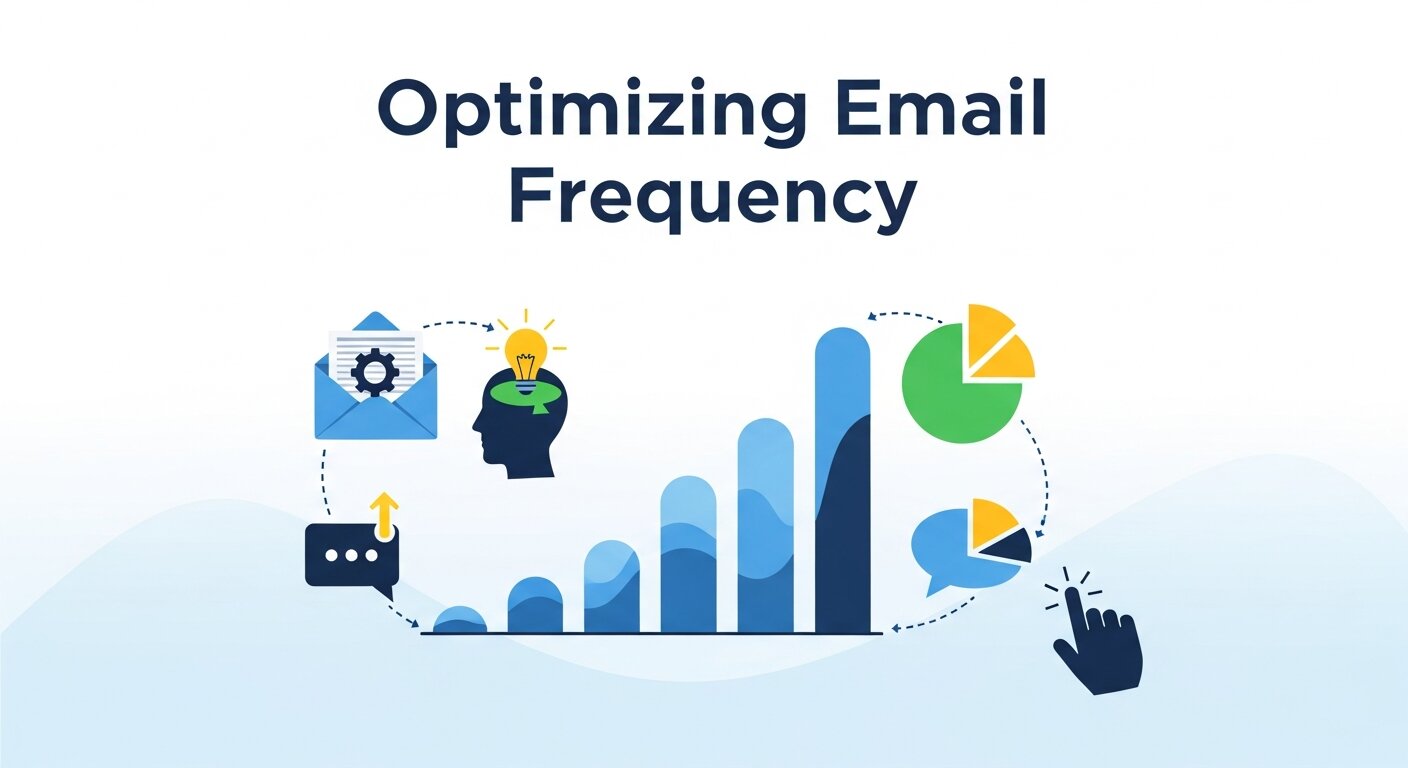 Finding the right balance for how often you send emails is crucial for maintaining engagement without overwhelming your subscribers. Sending too frequently can lead to unsubscribes and lower open rates, while sending too rarely may result in reduced brand recall. By analyzing email marketing data, you can determine when your audience is most responsive and which types of content resonate with them. Segmenting your list and tailoring messages to each group ensures that subscribers receive relevant information at appropriate intervals. Consistent monitoring of engagement metrics helps refine the ideal sending schedule, balancing impact and subscriber satisfaction.
Reducing Campaign Costs
 Email marketing remains a cost-effective channel, but campaigns can still incur unnecessary expenses if not optimized. Understanding your email marketing cost allows you to allocate resources efficiently, whether investing in automation tools, design templates, or subscriber acquisition efforts. By targeting high-value segments and avoiding excessive sends to unengaged subscribers, businesses can reduce wasted spend while improving ROI. Regularly reviewing performance metrics, including click-through rates and conversions, ensures that every campaign dollar contributes to measurable results, making email marketing both efficient and impactful.
Leveraging Behavioral Insights
Subscriber behavior provides actionable insights that can significantly improve email marketing performance. Analyzing engagement patterns—such as click behavior, past purchases, and interaction with previous campaigns—helps create tailored messaging that resonates with individual recipients. Incorporating these insights into mid-cycle marketing email campaigns ensures content is timely, relevant, and more likely to drive conversions. Combining this with careful segmentation and personalization strengthens engagement, improves open rates, and maximizes the effectiveness of your email marketing strategy while providing valuable data for future campaigns.
Your Next Steps for Better Email Timing
 Start by analyzing your current email performance data to identify patterns in your audience’s behavior. Look for trends in open rates, click-through rates, and engagement across different days and times.
Set up A/B tests to compare different send times systematically. Begin with broad comparisons—morning versus evening, or weekday versus weekend—then narrow down to specific hours as you gather data.
Consider your audience’s lifestyle and professional schedules. A newsletter for working parents will have different optimal times than a B2B software announcement or a retail promotion.
Remember that optimal timing is just one piece of the email marketing puzzle. Great content, compelling subject lines, and proper list segmentation matter more than perfect timing. Use timing optimization as a way to enhance already strong campaigns, not as a substitute for quality content and strategy.
The best time to send your marketing emails is ultimately when your specific audience is most likely to engage. With systematic testing and careful analysis, you can discover those golden moments when your emails get the attention they deserve.
Frequently Asked Questions (FAQ)
1. What is generally the best day to send marketing emails?
Tuesday, Wednesday, and Thursday often produce the highest open rates across many industries. Tuesday is frequently cited as the top-performing day. However, the best day ultimately depends on your specific audience and business type.
2. What is the best time of day to send emails?
Common high-performing windows include 8–10 AM, 12–1 PM, and 5–7 PM. Morning sends work well for professional audiences, while evenings may perform better for consumer-focused brands. Testing is essential to confirm what works best for your subscribers.
3. Are weekends bad for email marketing?
Not necessarily. While weekends traditionally show slightly lower open rates for B2B campaigns, some B2C brands perform well on Saturdays or Sundays, especially when targeting shoppers or leisure readers. Audience behavior should guide your decision.
4. Does send time really impact open rates?
Yes. Timing affects inbox competition, recipient availability, and visibility. Even a well-written email can underperform if it arrives when recipients are busy or overwhelmed with other messages.
5. Should B2B and B2C emails be sent at different times?
Generally, yes. B2B emails tend to perform better during standard business hours on weekdays. B2C emails often see stronger engagement during evenings or weekends when people are browsing personal emails.
6. How important are time zones in email marketing?
Time zones are very important, especially for national or global audiences. Sending emails at the same local time for each recipient can significantly improve engagement compared to sending all emails at one fixed time.
7. How can I find my optimal send time?
Use A/B testing to compare different days and times. Start with broader comparisons, then narrow down to specific hours. Analyze open rates, click-through rates, and conversions to identify patterns over several campaigns.
8. Should I change send times frequently?
Avoid changing send times randomly. Instead, test strategically and stick with a high-performing window once you find it. Consistency can also help subscribers anticipate and engage with your emails.
9. Do mobile users affect timing decisions?
Yes. With many emails opened on mobile devices, people often check inboxes during commutes, lunch breaks, or evenings. Understanding mobile behavior can help refine your send-time strategy.
10. Is timing more important than content quality?
No. Timing can improve visibility, but strong subject lines, relevant content, and proper segmentation have a greater overall impact on performance. Timing should enhance a solid strategy—not replace it.

















No Comments