

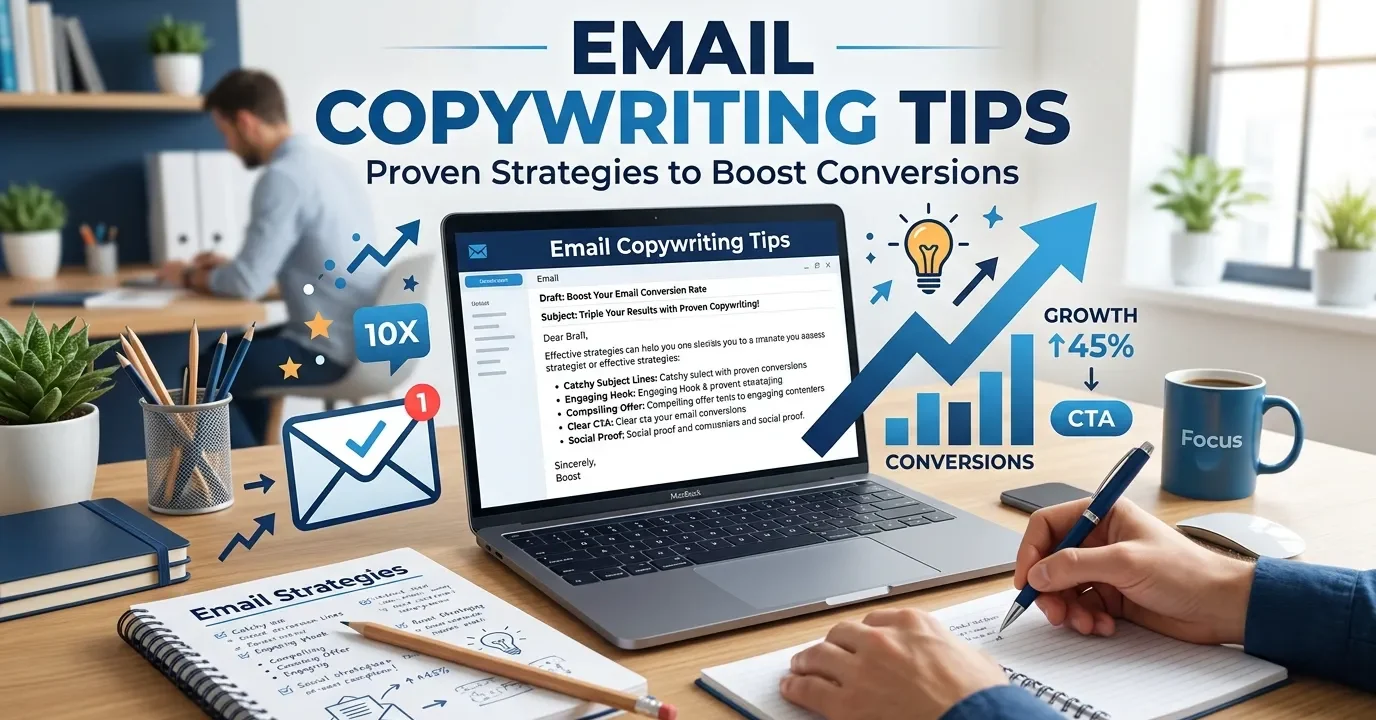
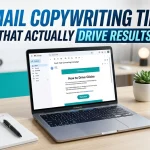
Email Copywriting Tips help marketers create emails that attract attention, increase engagement, and drive conversions. This guide covers proven strategies for writing compelling subject lines, personalized content, and effective calls-to-action that deliver better email marketing results.
Effective email copywriting relies on a clear structure, persuasive techniques, and subject line optimization to drive higher conversions. The best approach combines personalized content, a single strong call-to-action, and concise formatting tailored to the specific needs of the target audience.
Writing compelling emails remains one of the most reliable ways to connect with audiences and drive measurable business results. Organizations send millions of emails daily, yet only a fraction of those messages inspire readers to take action. The difference between a message that gets deleted and one that generates revenue comes down to the quality of the copy.
Professional marketers understand that a crowded inbox demands clarity, relevance, and value. Readers allocate just seconds to evaluate a new message before deciding to read further or hit the trash icon. Capturing their attention requires strategic planning, deep audience understanding, and a mastery of persuasive writing principles.
This comprehensive guide details the precise methods used by top-performing marketers to craft emails that resonate. By applying these foundational principles and advanced tactics, organizations can transform their email campaigns into powerful drivers of engagement and revenue.
Email Copywriting Best Practices
Mastering email copywriting requires adherence to several core principles that respect the reader’s time and attention. The most critical best practice involves maintaining a singular focus for every message sent. When an email contains multiple competing offers, readers often experience decision fatigue and abandon the message entirely. Focus each campaign on one primary goal, whether that involves downloading a whitepaper, registering for a webinar, or purchasing a product.
Another fundamental best practice is writing for the individual rather than the crowd. Successful marketers use segmentation data to tailor messages to specific buyer personas. Addressing the recipient by name and referencing their past interactions with the brand builds a sense of personal connection. Use words like “you” and “yours” frequently to center the reader in the narrative.
Finally, brevity serves as the cornerstone of effective email communication. Concise writing ensures that the main message and call-to-action remain visible without excessive scrolling. Edit ruthlessly to remove filler words, industry jargon, and long-winded introductions.
How to Write High Converting Email Copy
High converting email copy seamlessly guides the reader from the subject line to the final call-to-action. The process begins with establishing immediate relevance. Within the first two sentences, the reader must understand exactly why they received the message and what value it offers them. Delaying this information often results in lost engagement.
To drive conversions, copywriters must clearly articulate the benefits of the offer rather than just listing features. Readers care about how a product or service solves their specific problems. Instead of stating that a software platform includes automated reporting, explain that the platform saves managers ten hours of manual data entry every week.
A high-converting email also relies on a frictionless call-to-action. The desired action must be crystal clear and easy to execute. Use action-oriented verbs like “Download,” “Register,” or “Start,” and place the primary link or button prominently within the email body.
Email Marketing Copywriting Strategies
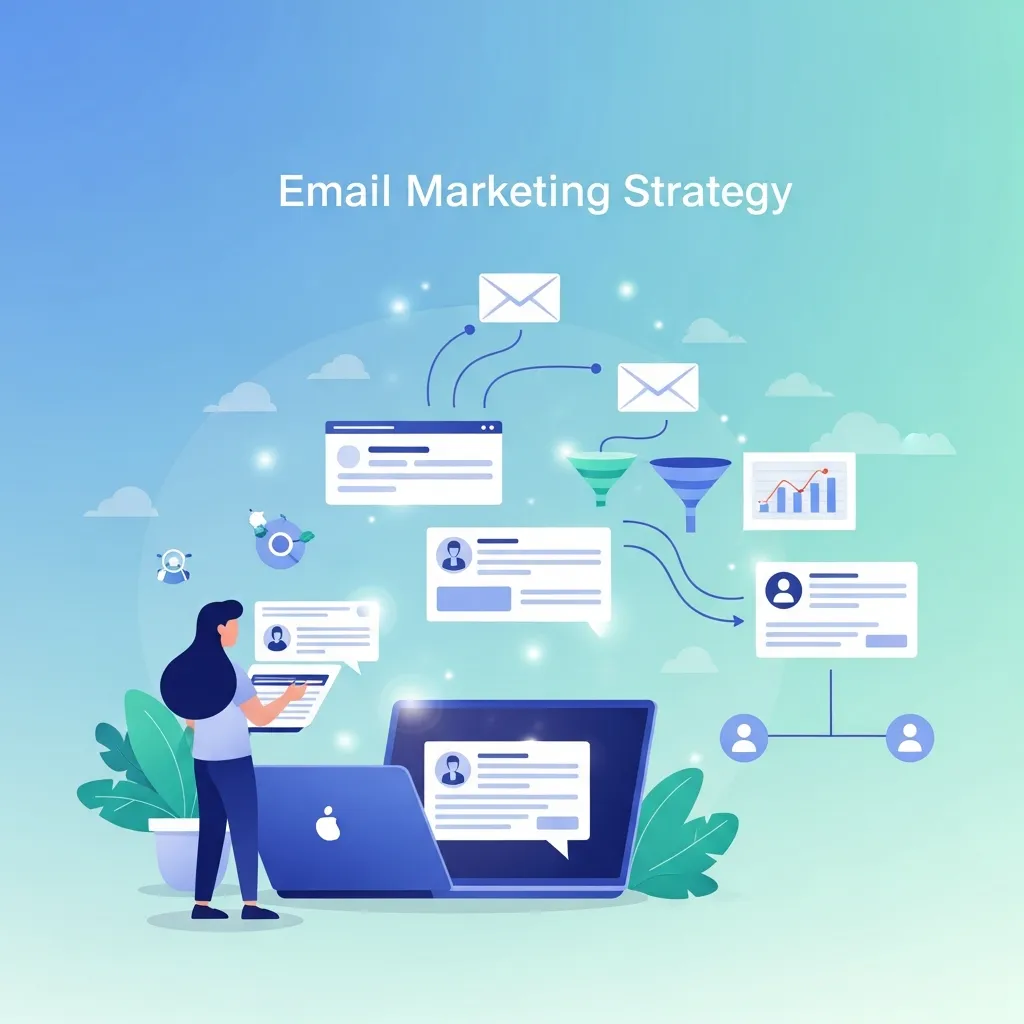
Developing a cohesive strategy ensures that individual emails work together to build a broader brand narrative. One highly effective strategy involves the use of storytelling. Sharing a brief, relatable story about a customer overcoming a specific challenge helps humanize the brand and makes the marketing message more memorable.
One highly effective strategy involves the use of storytelling. Sharing a brief, relatable story about a customer overcoming a specific challenge helps humanize the brand and makes the marketing message more memorable. This approach is explored in greater detail through proven email marketing storytelling techniques.
Another proven strategy is the implementation of the Problem-Agitate-Solve (PAS) framework. The copywriter first identifies a pressing problem the reader faces. Next, they agitate that problem by highlighting the negative consequences of leaving it unresolved. Finally, the copy introduces the product or service as the ideal solution.
Marketers also utilize the strategy of building a distinct brand voice. Consistency in tone across all email communications helps subscribers recognize and trust the brand. Whether the voice is authoritative, humorous, or deeply empathetic, maintaining that personality strengthens the relationship with the audience.
Persuasive Email Writing Techniques
Persuasion in email writing relies heavily on psychology and human behavioral triggers. Scarcity and urgency represent two of the most powerful persuasive techniques available. Highlighting limited inventory or a fast-approaching deadline encourages readers to act immediately rather than postponing the decision.
Social proof serves as another highly effective persuasion tool. Including brief testimonials, user ratings, or impressive adoption statistics validates the offer and reduces the reader’s perceived risk. When subscribers see that peers have successfully used a product, they feel more confident in taking the next step.
Additionally, persuasive copywriters employ the technique of addressing objections directly. Anticipating reasons why a reader might hesitate—such as cost, implementation time, or complexity—and refuting those concerns within the text builds credibility and removes barriers to conversion.
Email Subject Line Optimization Tips
The subject line functions as the gatekeeper to the email content. Without an optimized subject line, even the most brilliant body copy remains unread. The most successful subject lines create a sense of curiosity without crossing into deceptive clickbait. Clearly hinting at the value inside the email encourages the recipient to open the message.
Length plays a critical role in subject line optimization. Mobile devices truncate long subject lines, often cutting off the most important words. Businesses looking to improve opens should also review these best practices for optimizing email marketing subject lines.
Personalization in the subject line also drives higher open rates. Including the recipient’s first name or referencing their specific geographic location signals that the message is tailored specifically for them. A subject line reading “Chicago marketing events for Sarah” performs significantly better than a generic “Upcoming events in your area.”
Keeping readers engaged throughout the entire email requires strategic formatting and conversational pacing. Long blocks of text intimidate readers and cause them to lose focus. Breaking the copy into short paragraphs of two to three sentences makes the content visually appealing and easy to digest.
Formatting tools like bullet points, numbered lists, and bold text help draw the eye down the page. These elements allow readers to scan the email and grasp the main points in a matter of seconds. Highlighting key phrases ensures that even skimming readers understand the core message.
Engagement also increases when the copywriter uses active voice instead of passive voice. Active voice makes the writing more dynamic and energetic. For example, writing “Our team designed a new template” sounds much more engaging than “A new template was designed by our team.”
Sales Email Copywriting Examples
Reviewing practical examples helps solidify the concepts of effective sales copywriting. Consider a B2B software company targeting sales directors. An ineffective email might read: “We offer a CRM platform that includes email tracking and pipeline management. Click here to buy.” This approach lacks value and personalization.
A stronger sales email applies the PAS framework and focuses on benefits. It might read: “Managing a remote sales team often leads to blind spots in your pipeline. When reps forget to log activities, revenue forecasting becomes impossible. Our platform automates activity tracking, giving you complete visibility into your pipeline without requiring extra admin work from your reps. Schedule a demo to see how.”
Another example involves an e-commerce brand recovering an abandoned cart. Instead of a generic reminder, the email leverages urgency and a clear benefit: “Your selected boots are selling out quickly. Complete your purchase within the next two hours to secure your pair and receive free expedited shipping.”
Email Marketing Conversion Tips
Optimizing for conversion requires constant refinement and testing. A/B testing represents the most reliable method for improving conversion rates over time. Marketers should test one variable per campaign, such as the subject line, the call-to-action button color, or the tone of the introductory paragraph. Analyzing these results provides actionable data on audience preferences.
A/B testing represents the most reliable method for improving conversion rates over time. Marketers should test one variable per campaign and analyze the results carefully. For a deeper process, see this guide to A/B testing in email marketing
Creating a sense of exclusivity also boosts conversion metrics. Framing an offer as an exclusive perk for subscribers makes the reader feel valued. Using phrases like “VIP access,” “Subscriber-only discount,” or “Early access for our community” elevates the perceived value of the offer.
Friction reduction stands as another essential conversion tip. Every extra step a user must take reduces the likelihood of conversion. Ensure that all links work perfectly, that landing pages load instantly, and that mobile users can complete the desired action effortlessly from their devices.
Professional Email Writing Tips for Marketers
Professionalism in marketing emails builds long-term trust and brand equity. This requires meticulous attention to detail regarding grammar, spelling, and punctuation. A single typo can undermine the authority of an otherwise persuasive message. Utilizing robust proofreading tools and peer reviews before hitting send is mandatory.
Marketers must also respect data privacy and compliance regulations. Professional email copy always includes a clear, easy-to-find unsubscribe link. Honoring the user’s right to opt out maintains brand reputation and ensures compliance with global privacy standards like GDPR and CAN-SPAM.
Finally, professional writing avoids hyperbole and exaggerated claims. Promising unrealistic results damages credibility and leads to high churn rates. Factual, honest, and transparent communication fosters a loyal subscriber base that trusts the brand’s recommendations.
Effective Email Copy Structure and Format
The structure of an email directly impacts its readability and success rate. A standard effective format begins with a recognizable sender name and a compelling subject line. The preheader text—the short summary visible in the inbox preview—must complement the subject line and provide an additional hook.
The body of the email should follow a logical hierarchy. The headline or opening sentence immediately grabs attention. The following sentences build interest by explaining the value proposition. The copy then transitions into creating desire through benefits, social proof, or urgency.
The structure concludes with a singular, prominent call-to-action. The CTA button should feature contrasting colors to stand out from the rest of the email design. Below the CTA, professional formatting requires a sign-off, contact information, and necessary legal disclaimers or unsubscribe links neatly arranged in the footer.
Frequently Asked Questions
What is the ideal length for a marketing email?
The ideal length depends entirely on the email’s objective. Promotional emails typically perform best between 50 and 125 words, allowing for quick scanning. Educational newsletters or storytelling emails can extend to 500 words or more, provided the formatting includes bullet points and short paragraphs to maintain readability.
How often should organizations send marketing emails?
Send frequency varies by industry and audience preference. Choose a weekly schedule if your priority is consistent brand awareness without overwhelming subscribers. Choose a bi-weekly or monthly schedule if you require more time to gather high-value, comprehensive content. Always monitor unsubscribe rates to gauge if frequency is too high.
What makes a call-to-action effective?
An effective call-to-action uses specific, action-oriented language and stands out visually from the rest of the text. Instead of generic phrases like “Click Here,” use value-driven commands like “Claim Your Free Trial” or “Download the Report.” Ensure the email contains only one primary CTA to prevent decision fatigue.


I'm Email Marketer who crafts targeted campaigns that drive engagement, nurture leads, and boost conversions. With a passion for creating personalized email strategies.





No Comments