


Email Marketing ROI measures how much revenue your email campaigns generate compared to their cost. By tracking key metrics like conversion rates, engagement, revenue per email, and customer acquisition cost, businesses can identify what works and improve performance. With smart segmentation, automation, and continuous optimization, email remains one of the highest-ROI digital marketing channels available.
Email marketing ROI measures the revenue you earn for every dollar spent on email campaigns. On average, email returns $36–$42 for every $1 invested. To improve your ROI, track key metrics like conversion rates, engagement, and customer acquisition cost—then use automation and segmentation to boost results.
Email might be one of the oldest digital marketing channels, but it remains one of the most profitable. While newer platforms compete for attention and budget, email quietly delivers some of the highest returns in marketing. The challenge isn’t whether email works—it’s knowing how to measure its performance and squeeze more value from every send.
This guide breaks down how to calculate email marketing ROI, which metrics actually matter, and how to improve your returns over time. You’ll learn how to track revenue, lower your acquisition costs, and use automation to scale results without scaling effort. By the end, you’ll have a clear framework for turning your email program into a measurable growth engine.
What is email marketing ROI?
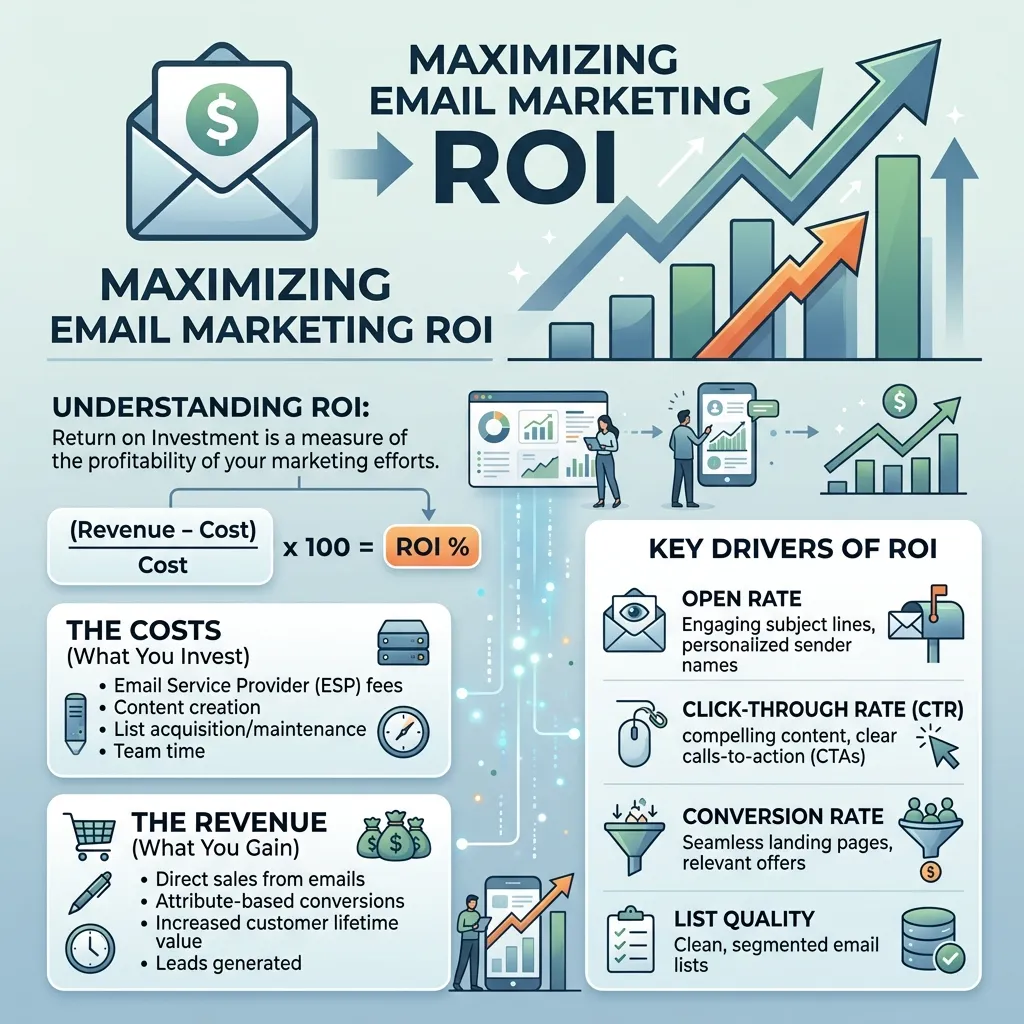
Email marketing ROI is the financial return you generate from your email campaigns relative to their cost. It tells you whether your email program is making money, breaking even, or draining resources.
The formula is straightforward:
Email Marketing ROI = (Revenue from Email − Cost of Email Campaign) ÷ Cost of Email Campaign × 100
For example, if you spend $1,000 on an email campaign and it generates $10,000 in revenue, your ROI is 900%. In other words, every dollar spent returned nine dollars in profit.
Industry research consistently ranks email among the highest-performing channels. The Data & Marketing Association has reported average returns of around $42 for every $1 spent, while more recent estimates from Litmus place the figure closer to $36 to $1. Either way, few channels come close to matching this kind of efficiency.
If you’re trying to understand how revenue is actually driven inside campaigns, it’s worth exploring how campaigns are structured for performance in real-world scenarios. email campaigns that actually convert
Why is email marketing so effective?
Email marketing effectiveness comes down to three things: ownership, intent, and personalization.
Unlike social media followers, your email list is an asset you own outright. No algorithm change can cut off your access to subscribers. When someone hands over their email address, they’re signaling genuine interest—which means you’re speaking to a warmer audience than you’d find through paid ads or cold outreach.
Email also gives you room to personalize at scale. You can segment subscribers by behavior, purchase history, or preferences, then send tailored messages that feel relevant. Relevant emails get opened, clicked, and acted on—and that directly fuels your return on investment.
Which email marketing metrics should you track?
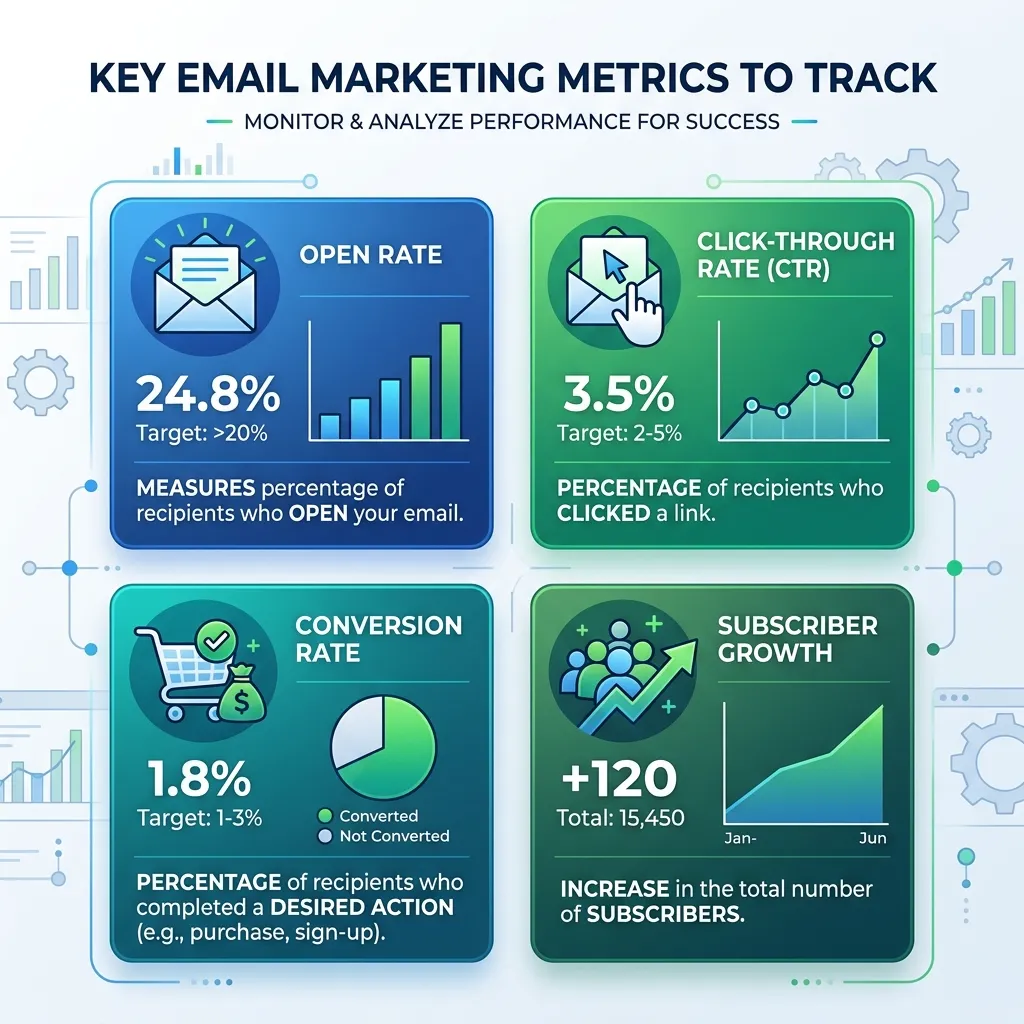
Measuring email campaign performance means looking beyond vanity numbers. Open rates feel satisfying, but they don’t pay the bills. Here are the metrics that genuinely reflect your program’s health.
Email conversion rates
Your conversion rate is the percentage of recipients who complete a desired action—making a purchase, booking a demo, or downloading a resource. This is one of the clearest indicators of email marketing effectiveness because it ties directly to business outcomes.
To calculate it, divide the number of conversions by the number of emails delivered, then multiply by 100. A typical email conversion rate sits between 1% and 5%, though this varies widely by industry and campaign type.
Email engagement rates
Engagement rates cover opens, clicks, and click-to-open rates. While opens have become less reliable due to privacy changes like Apple’s Mail Privacy Protection, click-through rate (CTR) remains a solid signal of how compelling your content is.
A healthy click-through rate generally falls between 2% and 5%. If your engagement rates drop, it often points to issues with your subject lines, content relevance, or list quality.
For deeper optimization, subject line strategy plays a major role in engagement performance. email subject line formulas that work
Email revenue tracking
Revenue tracking connects your emails to actual dollars earned. By tagging links with UTM parameters and integrating your email platform with your analytics or e-commerce tools, you can attribute sales directly to specific campaigns.
Two useful figures here are revenue per email (total revenue divided by emails sent) and revenue per subscriber. These metrics help you understand the true value of your list and identify which campaigns punch above their weight.
Customer acquisition cost
Customer acquisition cost (CAC) measures how much you spend to gain a new customer through email. To calculate it, divide your total email marketing costs by the number of new customers acquired during that period.
Email typically delivers a lower CAC than paid channels because you’re marketing to an audience that already opted in. Keeping a close eye on CAC ensures your growth stays profitable rather than expensive.
List growth and churn
Your list is a living asset. List growth rate tracks how quickly you’re adding new subscribers, while churn rate measures how many you lose to unsubscribes or bounces. A shrinking or stagnant list will eventually erode your ROI, no matter how good your campaigns are.
How do you calculate the ROI of marketing automation?
Marketing automation ROI deserves its own spotlight because automated emails consistently outperform one-off broadcasts. Welcome series, abandoned cart reminders, and post-purchase flows run in the background and generate revenue around the clock.
According to Omnisend research, automated emails can drive a disproportionate share of email revenue—often generating far more revenue per send than standard campaigns, despite making up a small fraction of total volume. The reason is timing: automated messages reach people at the exact moment they’re most likely to act.
To measure marketing automation ROI, compare the revenue generated by your automated flows against the cost of your automation platform and the time invested in building them. Because these flows run continuously, their returns compound over time—making them some of the most cost-effective assets in your marketing stack.
How can you improve your email marketing ROI?
Once you understand your baseline metrics, you can start optimizing. Here are practical ways to lift your returns.
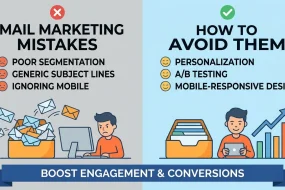
Segmentation is one of the most effective levers for increasing performance, especially when combined with behavioral targeting and automation. email segmentation strategy guide
Segment your audience
Sending the same email to your entire list wastes potential. Segmentation lets you group subscribers by behavior, demographics, or lifecycle stage, then send messages that resonate. Segmented campaigns consistently outperform generic blasts on opens, clicks, and conversions.
Personalize beyond the first name
True personalization goes deeper than “Hi [First Name].” Use purchase history, browsing behavior, and engagement data to recommend products, trigger timely follow-ups, and tailor content to each subscriber’s interests.
Test and refine continuously
A/B testing removes the guesswork. Test one variable at a time—subject lines, calls to action, send times, or layout—and let the data guide your decisions. Small, consistent improvements add up to significant gains over months.
Clean your list regularly
A bloated list full of inactive subscribers drags down your deliverability and inflates your costs. Remove unengaged contacts periodically and run re-engagement campaigns to win back dormant subscribers before cutting them loose.
Optimize for mobile
More than half of all emails are opened on mobile devices. If your emails don’t render cleanly on a small screen, you’re losing conversions. Use responsive design, concise copy, and prominent, tappable buttons.
What does good email marketing analytics look like?

Strong email marketing analytics turn raw data into decisions. The goal isn’t to drown in numbers—it’s to track the handful of metrics that drive action and review them on a consistent schedule.
Set up a dashboard that pulls together your conversion rates, revenue per campaign, engagement trends, and CAC. Most email platforms offer built-in reporting, but pairing them with Google Analytics gives you a fuller picture of how email contributes to your overall funnel.
Review your performance weekly for active campaigns and monthly for broader trends. Look for patterns: Which subject lines drive opens? Which offers convert? Which segments deliver the highest revenue? Over time, these insights compound into a sharper, more profitable strategy.
Turning your email program into a growth engine
Email marketing remains one of the most cost-effective channels available, but its returns depend on disciplined measurement and continuous improvement. By tracking the right metrics—conversion rates, engagement, revenue, and acquisition cost—you gain a clear view of what’s working and where to focus.
Start by calculating your current ROI using the formula above. Then pick one or two areas to improve, whether that’s tightening your segmentation, building an automated welcome flow, or cleaning your list. Measure the impact, refine, and repeat. The brands that win with email aren’t necessarily the ones with the biggest lists—they’re the ones who treat every send as a measurable, improvable opportunity.
Frequently asked questions
What is a good ROI for email marketing?
A strong email marketing ROI typically ranges from 3600% to 4200%, meaning $36 to $42 returned for every $1 spent. Returns vary by industry, list quality, and strategy, but email consistently outperforms most other digital channels.
How do you calculate email marketing ROI?
Use this formula: (Revenue from Email − Cost of Email Campaign) ÷ Cost of Email Campaign × 100. For example, earning $10,000 from a $1,000 campaign gives you a 900% ROI.
Which email marketing metrics matter most?
The most important metrics are conversion rate, click-through rate, revenue per email, and customer acquisition cost. These tie directly to revenue and profitability, unlike vanity metrics such as open rate alone.
Why is marketing automation ROI so high?
Automated emails like welcome series and abandoned cart reminders reach subscribers at the moment they’re most likely to act. Because they run continuously with minimal ongoing effort, their returns compound over time.
How can I lower my customer acquisition cost with email?
Lower your CAC by marketing to an opted-in audience, segmenting your list for relevance, automating repetitive flows, and cleaning out inactive subscribers. These steps boost efficiency and reduce wasted spend.
What is Email Marketing ROI?
Email Marketing ROI is the amount of revenue generated from email campaigns compared to the total cost of running those campaigns.
How do you calculate Email Marketing ROI?
Use this formula: (Revenue − Cost) ÷ Cost × 100. This shows the percentage return on your email marketing investment.
What is considered a good Email Marketing ROI?
A strong Email Marketing ROI is often reported between $36 and $42 in revenue for every $1 spent, though results vary by industry and strategy.
Which metrics are most important for measuring Email Marketing ROI?
Key metrics include conversion rate, click-through rate, revenue per email, customer acquisition cost (CAC), and subscriber growth rate.
Why is email marketing more profitable than many other channels?
Email marketing reaches an opted-in audience, supports personalization, and typically delivers lower acquisition costs than paid advertising channels.
How can marketing automation improve Email Marketing ROI?
Automated campaigns like welcome emails, abandoned cart reminders, and follow-up sequences generate revenue consistently with minimal ongoing effort.
Does audience segmentation increase Email Marketing ROI?
Yes. Segmentation helps deliver more relevant content, which often leads to higher engagement, conversions, and overall ROI.
How often should Email Marketing ROI be reviewed?
Campaign performance should be monitored weekly, while overall ROI trends and strategy adjustments are best reviewed monthly.
What are the best ways to maximize Email Marketing ROI?
Focus on list segmentation, personalization, automation, A/B testing, mobile optimization, and regular list cleaning to improve results and increase profitability.


I'm Email Marketer who crafts targeted campaigns that drive engagement, nurture leads, and boost conversions. With a passion for creating personalized email strategies.












No Comments