

Building an email list helps you reach your audience directly without relying on social media. It works by offering a valuable lead magnet and capturing emails through opt-in forms and landing pages. Consistent traffic and quality content help grow a list of engaged subscribers who are more likely to convert into customers.
To build an email list, offer a valuable lead magnet (like a free guide or discount), capture signups through optimized opt-in forms and landing pages, and drive traffic using your website, social media, and content. Focus on quality subscribers who genuinely want to hear from you—not just big numbers.
Email might be the oldest trick in the digital marketing book, but it still outperforms nearly every other channel. The average return on email marketing sits around $36 for every $1 spent, according to Litmus. That kind of payoff is hard to ignore.
The catch? You need an actual list of subscribers to email. And not just any subscribers—people who open your messages, click your links, and eventually buy what you’re selling.
This guide walks you through proven email list building strategies, from creating irresistible lead magnets to optimizing your landing pages for more signups. Whether you’re starting with zero subscribers or trying to revive a stale list, you’ll find practical tactics you can put to work today.
Why Building an Email List Still Matters
Social media platforms own your followers. Algorithms change overnight, accounts get suspended, and organic reach keeps shrinking. Your email list is different—you own it outright.
When you send an email, you’re landing directly in someone’s inbox. No algorithm decides whether they see it. That direct line makes email one of the most reliable channels for lead generation and sales.
A healthy email list also gives you something most marketers crave: control. You can segment subscribers, personalize messages, and test campaigns without depending on a third-party platform’s rules.
For long-term results, it’s important to understand why email marketing still matters in today’s crowded digital landscape.
How Do You Build an Email List from Scratch?
Starting from zero feels intimidating, but every massive list began with a single subscriber. The key is building a system that consistently turns visitors into subscribers.
Here’s the basic framework:
- Create a compelling reason to subscribe (your lead magnet or value proposition).
- Set up opt-in forms on your website and landing pages.
- Drive traffic to those forms through content, social media, and partnerships.
- Nurture new subscribers so they stay engaged and don’t unsubscribe.
Let’s break down each piece so you can start growing your subscriber count quickly.
What Are the Best Lead Magnets for Email List Growth?
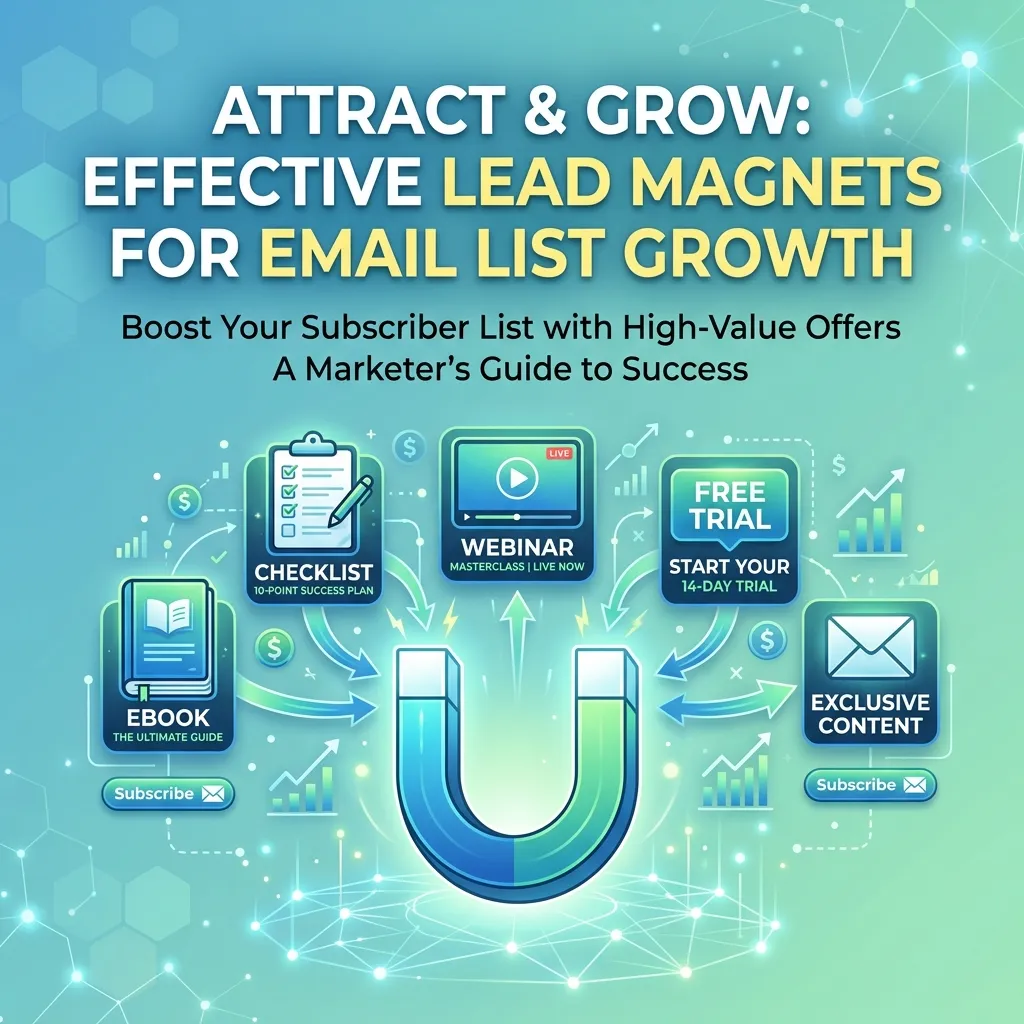
A lead magnet is a free resource you offer in exchange for someone’s email address. Nobody hands over their inbox for nothing, so your lead magnet needs to solve a real problem for your audience.
The best lead magnets share a few traits: they’re specific, instantly useful, and easy to consume. A 50-page ebook sounds generous, but a one-page checklist someone can use in five minutes often converts better.
Choose a lead magnet that connects directly to what you sell, and make sure your targeting is tight. Pairing it with smart segmentation improves results dramatically—this guide on email segmentation strategies shows how to boost engagement after signup.
Here are lead magnet ideas that consistently perform:
- Checklists and cheat sheets: Quick, actionable, and easy to skim.
- Templates: Save people time on tasks they already do—email scripts, spreadsheets, design files.
- Free guides or mini-courses: Deliver deeper value over a few days via email.
- Discounts and coupons: Especially effective for ecommerce stores.
- Webinars or workshops: Great for high-ticket products and services.
- Free tools or calculators: Interactive resources tend to spread on their own.
- Exclusive content: Industry reports, research, or members-only resources.
Choose a lead magnet that connects directly to what you sell. If you offer fitness coaching, a “7-Day Meal Prep Plan” attracts the right people. A generic “10 Productivity Tips” might pull in subscribers who never become customers.
How Can You Grow Email Subscribers Organically?
Organic growth means earning subscribers without paying for ads. It takes more patience, but the subscribers you attract tend to be more engaged because they found you through genuine interest.
Create content that attracts your ideal subscriber
Blog posts, videos, and podcasts pull people into your world. When someone reads a helpful article, they’re far more likely to subscribe for more. Add a relevant content upgrade—a downloadable version or bonus resource—right inside your best-performing posts.
Use social media to funnel followers
Your social followers already like your content. Give them a reason to take the next step. Pin a post about your lead magnet, add a signup link to your bio, and mention your newsletter in your captions and videos.
Try guest posting and partnerships
Writing for other websites or collaborating with complementary brands puts you in front of fresh audiences. Include a link to your lead magnet in your author bio or partnership content.
Ask for referrals
Happy subscribers will share your newsletter if you make it easy. Add a “forward to a friend” line at the bottom of your emails, or build a simple referral program that rewards people for spreading the word.
What Email Opt-In Strategies Work Best for Websites?
Your website is prime real estate for capturing emails. The trick is placing opt-in forms where visitors naturally pause—without annoying them into closing the tab.
Here are opt-in placements worth testing:
- Pop-ups: Timed or exit-intent pop-ups grab attention. Used carefully, they can boost signups significantly. Used aggressively, they frustrate people.
- Embedded forms: Place these within blog posts, on your homepage, or in your sidebar.
- Header and footer bars: A slim signup bar at the top or bottom of your site stays visible without blocking content.
- Slide-ins: These appear as a visitor scrolls, offering a less intrusive alternative to full pop-ups.
- Dedicated signup page: A standalone page you can link to from anywhere.
Test different placements and offers. Small tweaks—like changing your button text from “Subscribe” to “Send me the guide”—can lift conversions more than you’d expect.
How Do You Optimize Landing Pages for Email Capture?
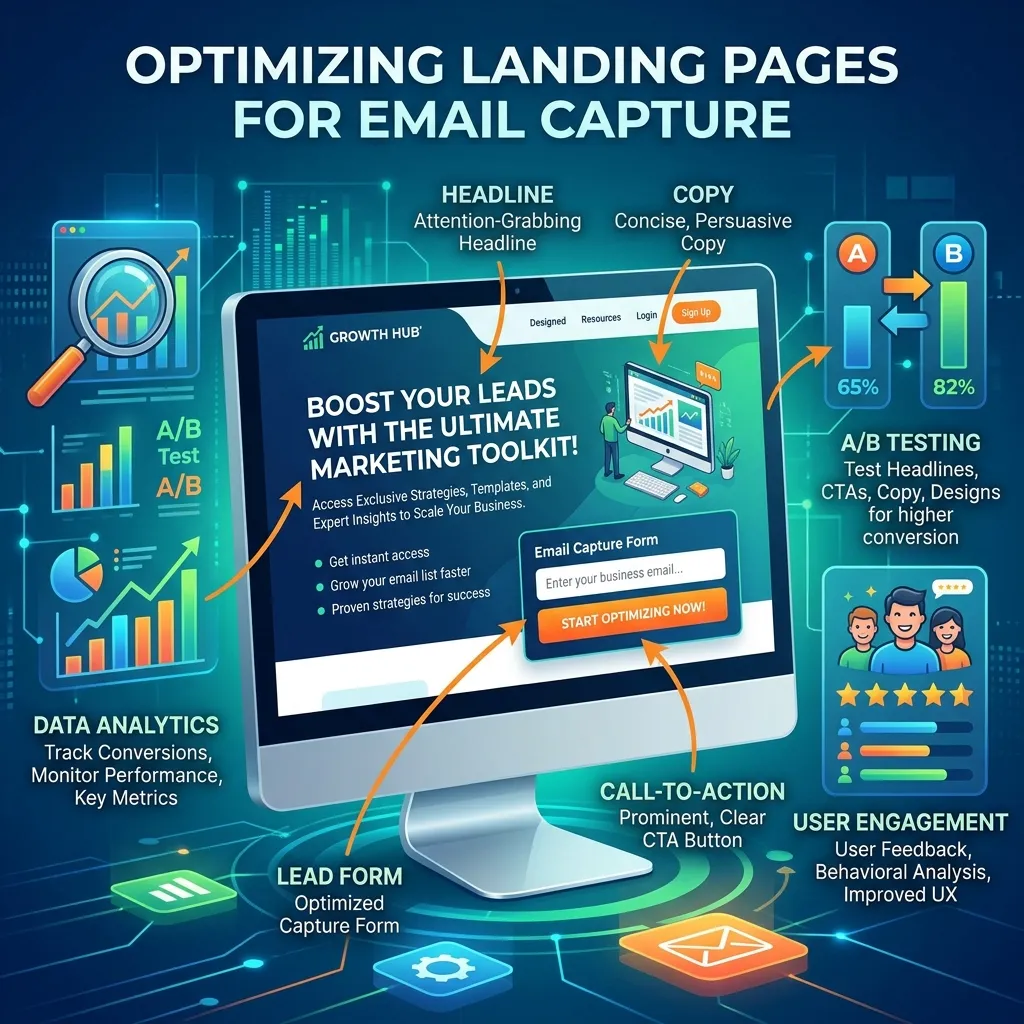
A landing page exists for one job: convert visitors into subscribers. Unlike a busy homepage, a good landing page removes distractions and points everything toward the signup form.
Strong email capture landing pages share these elements:
- A clear, benefit-driven headline: Tell people exactly what they’ll get.
- Concise copy: Explain the value in a few short sentences. Bullet points help.
- A single call to action: One form, one goal. Don’t compete with yourself.
- Social proof: Subscriber counts, testimonials, or recognizable logos build trust.
- Minimal form fields: Ask only for an email address. Every extra field reduces conversions.
- Fast load times: A slow page loses impatient visitors before they even read it.
Run A/B tests on your headline, button color, and form length. Even a small bump in conversion rate compounds over thousands of visitors.
What Are Some Email List Growth Hacks for Marketers?
Once the fundamentals are in place, a few clever tactics can speed up your list growth.
- Run a giveaway: Partner with related brands and require an email to enter. You’ll attract a flood of signups fast—just expect some to be lower quality.
- Add content upgrades to popular posts: Find your top blog posts and create a tailored bonus for each one.
- Use a two-step opt-in: Instead of showing a form immediately, have visitors click a link or button first. This small commitment often increases conversions.
- Host a webinar: Registration naturally requires an email, and attendees tend to be highly engaged.
- Collect emails offline: At events, conferences, or in-store, use a tablet or QR code to capture signups on the spot.
- Leverage your email signature: Add a link to your newsletter in every email you send.
Treat these as experiments. Track which tactics bring in subscribers who actually open and click, not just those who pad your numbers.
How Do You Get More Newsletter Subscribers Over Time?
Steady growth beats a one-time spike. The marketers who build large, engaged lists treat list building as an ongoing habit, not a single campaign.
Keep your existing subscribers happy first. When people enjoy your emails, they share them, reply to them, and stay subscribed. High engagement also keeps you out of spam folders, which protects your reach.
Then keep feeding the top of your funnel. Publish fresh content, refresh your lead magnets every so often, and revisit underperforming opt-in forms. Small, consistent improvements add up to meaningful growth over months and years.
You should also focus on deliverability and inbox placement. If your emails don’t reach people, growth doesn’t matter. This guide on how to avoid spam filters in email marketing helps ensure your list stays healthy and effective.
Finally, clean your list regularly. Removing inactive subscribers might feel counterproductive, but it improves your open rates, deliverability, and overall list health.
Start Building Your List Today
Building an email list isn’t about chasing the biggest number—it’s about gathering an audience that genuinely wants to hear from you. Start with one solid lead magnet, set up a single high-converting opt-in form, and drive traffic to it consistently.
Pick one strategy from this guide and put it into action this week. Maybe that’s creating a checklist your audience needs, or finally adding an exit-intent pop-up to your blog. Momentum builds from there.
Your future campaigns, product launches, and sales all depend on the list you start building today. The sooner you begin, the sooner that list starts paying off.
Frequently Asked Questions
How long does it take to build an email list?
It depends on your traffic and effort. With steady content and a solid lead magnet, many marketers gather their first 100 to 500 subscribers within a few months. Larger lists of thousands typically take a year or more of consistent work.
How much does it cost to start an email list?
You can start for free. Most email marketing platforms offer free plans for small lists, and creating a lead magnet costs nothing but your time. Paid ads, premium tools, and giveaways can speed things up if you have a budget.
What’s the best lead magnet for beginners?
A simple checklist or cheat sheet is the easiest starting point. It’s quick to create, easy for subscribers to use, and converts well because it delivers fast value.
How often should I email my list?
Consistency matters more than frequency. Whether you send weekly or monthly, stick to a schedule your subscribers can expect. Most newsletters perform well at one to four emails per month.
Is buying an email list a good idea?
No. Purchased lists violate the terms of most email platforms, hurt your deliverability, and often break privacy laws like GDPR and CAN-SPAM. Always build your list with people who actively opt in.
What is the best way to build an email list?
The best way is to offer a valuable lead magnet and use optimized opt-in forms on your website and landing pages to collect emails.
How do beginners start building an email list?
Beginners should start by creating a simple lead magnet like a checklist or guide and promoting it through a website and social media.
What is a lead magnet in email marketing?
A lead magnet is a free resource such as an ebook, discount, or template that users receive in exchange for their email address.
How can I grow my email list for free?
You can grow your email list for free by using content marketing, social media promotion, SEO blog posts, and referral strategies.
Why is email list building important?
Email list building is important because it gives you direct access to your audience and higher conversion rates compared to other channels.
What are the best tools to build an email list?
Popular tools include email marketing platforms, landing page builders, and opt-in form plugins that help capture and manage subscribers.
How often should I send emails to my list?
Most businesses send emails weekly or monthly, but consistency is more important than frequency.
What makes a good email opt-in form?
A good opt-in form is simple, asks only for an email address, and clearly communicates the value of subscribing.
Is buying an email list a good strategy?
No, buying email lists is not recommended because it leads to low engagement and can violate email marketing regulations.


I'm Email Marketer who crafts targeted campaigns that drive engagement, nurture leads, and boost conversions. With a passion for creating personalized email strategies.







No Comments