

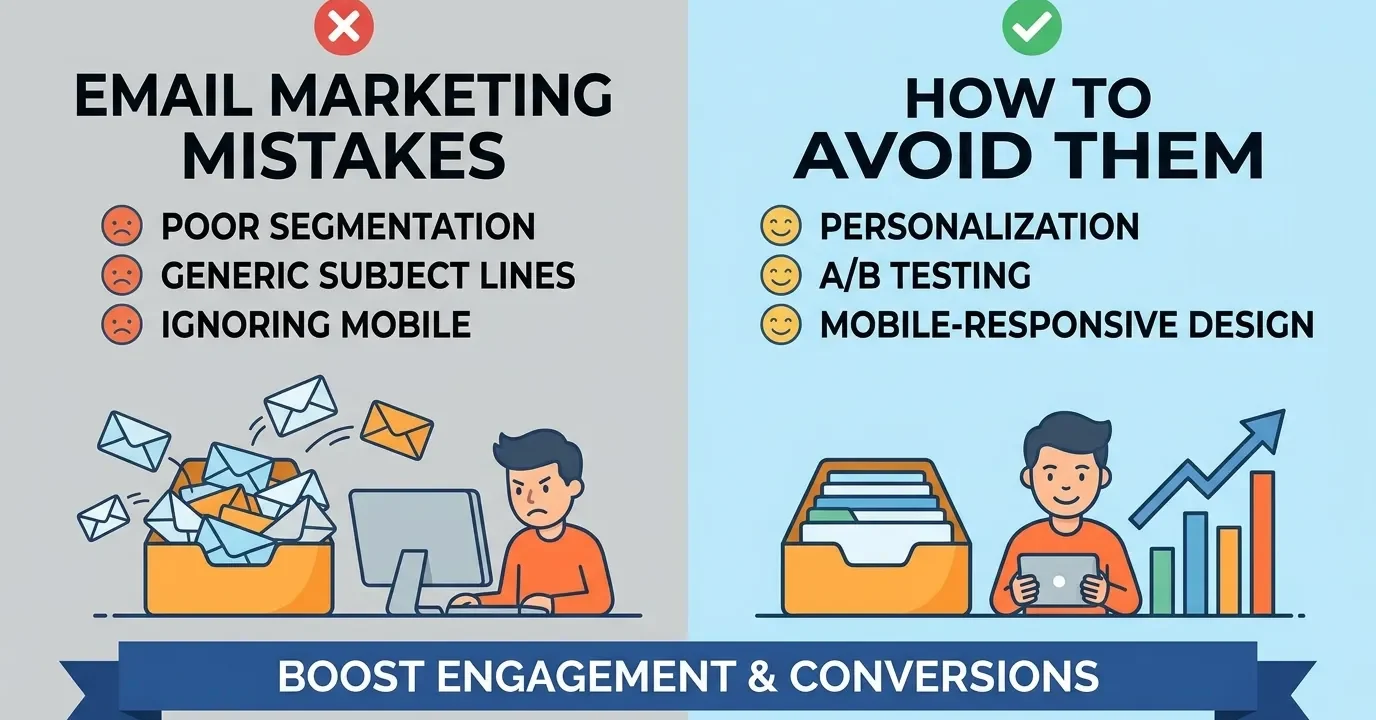
Email marketing continues to be one of the most reliable ways for businesses to communicate with customers. It helps brands generate leads, promote products, share valuable content, and build long-term customer relationships. Unlike social media, where visibility often depends on platform algorithms, email allows businesses to reach subscribers directly in their inboxes.
However, not every campaign delivers strong results. Many organizations struggle because they repeatedly make email marketing mistakes that reduce engagement, damage deliverability, and lower conversion rates. Even small errors can have a significant impact over time. Understanding these mistakes is the first step toward building a more effective email marketing strategy.
Why Email Marketing Mistakes Matter
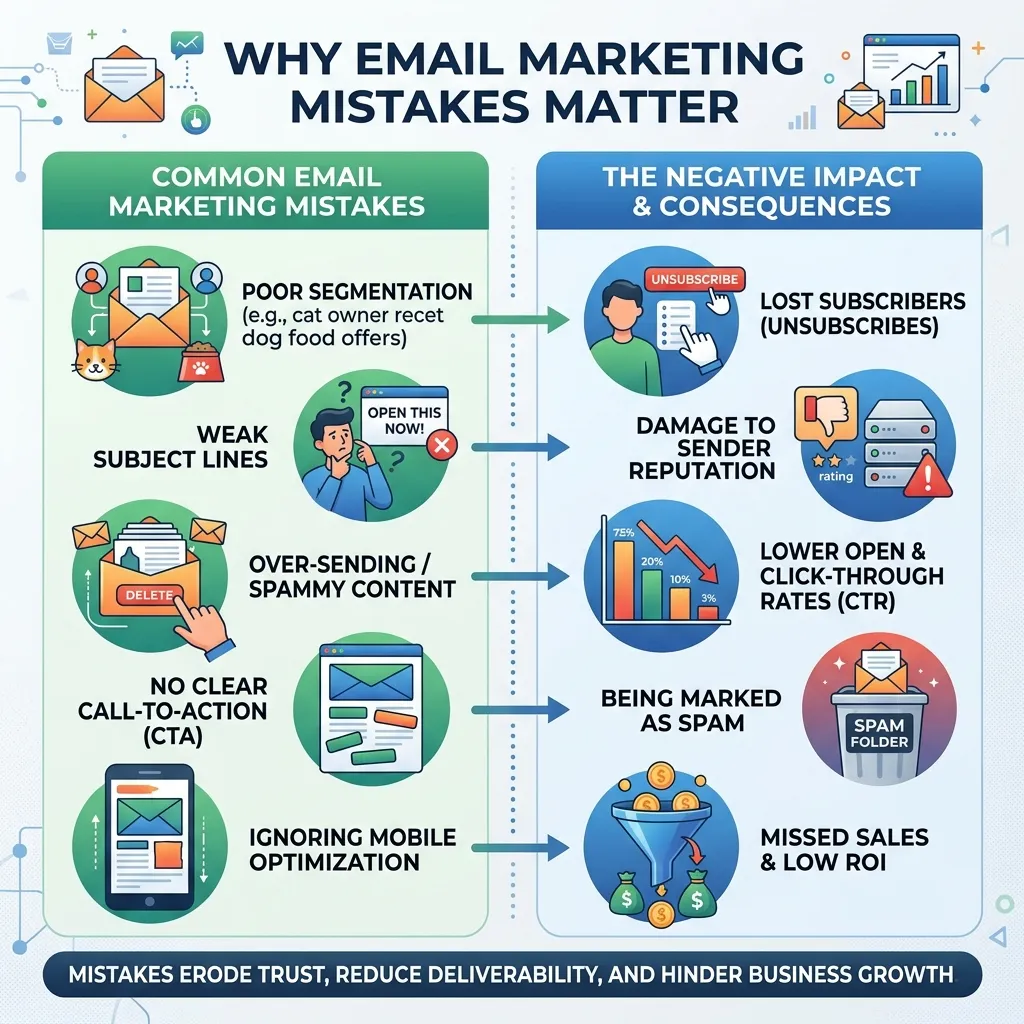
Successful email marketing requires more than simply sending messages to a list of subscribers. Every campaign should be designed to provide value, encourage engagement, and support business goals. When marketers overlook important details, campaign performance can suffer.
Common email marketing mistakes often lead to lower open rates, declining click-through rates, increased unsubscribe rates, and reduced customer trust. Over time, these issues can affect overall marketing performance and make it harder to achieve consistent results. Avoiding these mistakes helps businesses improve communication and get more value from every email they send.
Sending the Same Email to Everyone
One of the most common email marketing mistakes is sending identical emails to every subscriber. While this approach may seem efficient, it rarely produces the best results because not all subscribers have the same interests or needs.
A new subscriber, for example, may be looking for introductory information, while an existing customer may be interested in advanced content or exclusive offers. Segmenting your audience allows you to send more relevant messages based on subscriber behavior, preferences, and purchase history.
When recipients receive content that matches their interests, they are more likely to open emails, click links, and engage with your brand.
Ignoring Email List Quality
Another major source of email marketing mistakes is poor list management. Many businesses focus heavily on growing their subscriber count while paying little attention to the quality of their list.
Over time, email lists naturally collect inactive subscribers, outdated addresses, and invalid contacts. Continuing to send emails to these addresses can hurt deliverability and reduce campaign effectiveness.
Regular list maintenance helps keep engagement levels high. Removing inactive subscribers and verifying email addresses can improve sender reputation and increase the likelihood that emails reach the inbox instead of the spam folder.
Using Cold Outreach Emails for Lead Generation
Cold outreach can help businesses connect with potential customers who have not previously interacted with their brand. However, sending generic sales emails to large lists can quickly lead to low response rates and poor engagement. Effective cold outreach should focus on relevance, personalization, and providing a clear reason for the recipient to respond.
A well-structured cold outreach email template can make the process easier while maintaining consistency across campaigns. The message should include a relevant subject line, a personalized opening, a clear value proposition, and a simple call to action. Rather than immediately pushing for a sale, the goal should be to start a conversation and establish interest.
Marketers should also test different subject lines, messaging approaches, and follow-up strategies to determine what resonates with their target audience. For practical examples and guidance on creating effective outreach messages, explore this Cold Outreach Email Template guide.
Creating Weak Subject Lines
Subject lines often determine whether an email gets opened or ignored. Unfortunately, weak subject lines remain one of the most common email marketing mistakes businesses make.
Generic or confusing subject lines fail to capture attention. Similarly, overly promotional headlines can reduce trust and trigger spam filters. Effective subject lines are clear, concise, and relevant to the subscriber.
A strong subject line communicates value immediately. When subscribers understand why an email is worth opening, open rates tend to improve significantly.
Sending Too Many Promotional Emails

Many businesses treat email as a direct sales channel and fill their campaigns with constant promotional messages. While promotions are important, excessive sales-focused content can become overwhelming for subscribers.
This type of approach often leads to email marketing mistakes that damage long-term engagement. Subscribers may begin ignoring emails or unsubscribe altogether if every message feels like a sales pitch.
A healthier strategy involves balancing promotional content with educational resources, industry insights, helpful tips, and customer-focused information. Providing value consistently helps build trust and encourages long-term engagement.
Failing to Personalize Content
Personalization has become an essential part of modern email marketing. Yet many companies still send generic emails that feel disconnected from subscriber interests.
This remains one of the most impactful email marketing mistakes because personalized emails typically perform better than generic campaigns. Personalization can include subscriber names, product recommendations, browsing history, or tailored content based on previous interactions.
When subscribers feel that an email is relevant to their needs, they are more likely to engage with it. Personalization creates a better customer experience and often leads to stronger campaign performance.
Overlooking Mobile Optimization
Most people now check email on smartphones and tablets. Despite this, many businesses continue designing emails primarily for desktop users.
Among modern email marketing mistakes, poor mobile optimization can quickly reduce engagement. Emails that are difficult to read on smaller screens often get ignored or deleted.
Responsive email design helps ensure that content displays properly across devices. Readable text, optimized images, and easy-to-click buttons improve the user experience and encourage interaction.
Ignoring Email Deliverability Issues
Even the best content cannot generate results if subscribers never receive it. Deliverability problems are among the most costly email marketing mistakes because they prevent emails from reaching the inbox.
Poor sender reputation, high bounce rates, spam complaints, and missing authentication settings can all contribute to deliverability challenges. Businesses should regularly monitor these factors and implement authentication protocols such as SPF, DKIM, and DMARC.
Maintaining strong deliverability practices helps ensure that campaigns reach their intended audience.
Neglecting Campaign Testing
Many marketers launch campaigns without testing different elements first. This is another example of email marketing mistakes that can limit performance.
Testing allows businesses to compare subject lines, email layouts, content styles, and calls to action. Small improvements discovered through testing can have a significant impact on engagement and conversions.
Rather than relying on assumptions, marketers should use testing data to make informed decisions and continually improve campaign effectiveness.
Failing to Analyze Performance Metrics

One of the most preventable email marketing mistakes is ignoring campaign analytics. Every email campaign generates valuable data that can reveal what is working and what needs improvement.
Metrics such as open rates, click-through rates, conversions, bounce rates, and unsubscribe rates provide insights into subscriber behavior. Analyzing these metrics helps marketers identify trends and optimize future campaigns.
Without performance analysis, businesses may continue repeating ineffective strategies without understanding why results are declining.
Using Weak Calls to Action
Every email should encourage readers to take a specific action. Whether the goal is making a purchase, downloading a resource, or visiting a website, subscribers need clear direction.
Weak or unclear calls to action are common email marketing mistakes that reduce conversions. If readers do not understand what to do next, they are less likely to engage with the content.
Strong calls to action use clear language, stand out visually, and align naturally with the purpose of the email.
Building a Better Email Marketing Strategy
Avoiding email marketing mistakes requires a long-term commitment to improvement. Successful email marketing is built on understanding subscriber needs, delivering relevant content, and continuously optimizing campaigns.
Businesses that focus on segmentation, personalization, list quality, and performance analysis typically achieve stronger results. Instead of chasing short-term sales, they prioritize building trust and delivering value through every interaction.
Over time, this approach helps create stronger customer relationships and more sustainable marketing success.
Writing Emails That Capture Attention
Effective email content begins with strong copy. Your message should have a clear purpose, an engaging opening, and language that speaks directly to the recipient’s needs. Avoid unnecessary jargon, overly long introductions, and vague messaging. Every part of the email should move the reader toward understanding the value of your offer.
For more practical guidance, explore these Email Copywriting Tips to learn how stronger email copy can improve engagement and encourage readers to take action.
Automating Repetitive Email Tasks
Manually managing every email can become inefficient as your subscriber list grows. Email automation allows businesses to create workflows that automatically send messages based on subscriber actions, dates, or specific conditions. Welcome emails, follow-ups, reminders, and abandoned-cart messages are examples of tasks that can be automated.
Tools such as Airtable can also support structured email workflows by organizing customer information and triggering automated processes. Learn more with this Airtable Email Automation guide.
Managing Email Campaigns Effectively
Successful email marketing requires more than creating individual messages. Marketers need to plan campaigns, organize subscriber segments, schedule emails, monitor results, and make adjustments based on performance.
A structured approach to email campaign management helps businesses maintain consistency while reducing errors and improving overall campaign efficiency. This is especially important when running multiple campaigns for different audiences. For a deeper look at the process, read this Email Campaign Management guide.
Conclusion
Email marketing remains one of the most effective tools for reaching and engaging customers. However, even the best strategies can fail when businesses make avoidable email marketing mistakes.
Issues such as poor segmentation, weak subject lines, lack of personalization, deliverability challenges, and insufficient testing can significantly impact campaign performance. Fortunately, these problems can be corrected with the right strategy and consistent optimization.
By focusing on subscriber needs, maintaining a healthy email list, and continuously improving campaigns, businesses can increase engagement, improve conversions, and achieve better long-term results from their email marketing efforts.
Frequently Asked Questions
What are the most common email marketing mistakes?
Poor segmentation, weak subject lines, lack of personalization, poor list management, and ignoring analytics are among the most common mistakes.
Why do email campaigns have low open rates?
Low open rates are often caused by weak subject lines, poor audience targeting, and low sender reputation.
How can I improve email deliverability?
Maintain a clean email list, use authentication protocols, avoid spam practices, and monitor sender reputation regularly.
Why is segmentation important in email marketing?
Segmentation helps deliver more relevant content, which improves engagement and conversion rates.
How often should businesses send marketing emails?
The ideal frequency varies by audience, but consistent communication is generally more effective than irregular campaigns.
What role does personalization play in email marketing?
Personalization makes emails more relevant and increases the likelihood of opens, clicks, and conversions.
How can I improve email engagement?
Focus on valuable content, audience segmentation, personalization, and strong calls to action.
What causes email deliverability issues?
High bounce rates, spam complaints, poor sender reputation, and missing authentication settings are common causes.
Should I test email campaigns before sending them?
Yes. Testing helps identify the most effective subject lines, content formats, and calls to action.
How can businesses avoid email marketing mistakes?
Follow best practices, analyze performance data, maintain list quality, and continuously optimize campaigns based on subscriber behavior.


I'm Email Marketer who crafts targeted campaigns that drive engagement, nurture leads, and boost conversions. With a passion for creating personalized email strategies.







No Comments